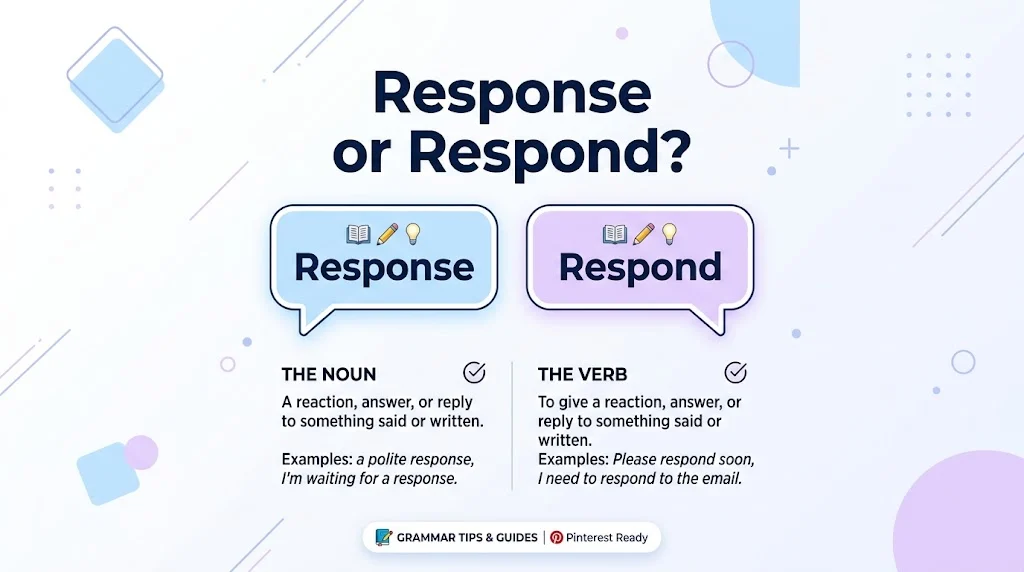
Quick Answer
Response is a noun that means an answer or reaction, while respond is a verb that means to answer or react. Use response when talking about an answer and respond when describing the action of answering.
Top alternatives: answer, reply, reaction, react, feedback
Have you ever typed “Please response” in a message and wondered if it sounds right? Or maybe you have seen “Please respond” in an email and thought both words meant exactly the same thing. These two words look almost identical, but they play different roles in a sentence. You might use them while texting a friend, replying to a DM, writing a work email, or asking someone to answer an important question.
Knowing the difference helps you sound more natural and confident, especially when you want your message to be clear. The good news is that the rule is simple once you understand it. This guide explains response or respond in everyday language, with examples, common mistakes, funny replies, and practical ways to use both words without making your grammar feel like a school assignment.
Funny Responses
- “My response is still loading.”
Example: Use this when a friend asks why you have not answered yet.
Meaning: It jokingly explains that you need more time to reply. - “Please respond after I find my brain.”
Example: Use this when someone asks you a complicated question.
Meaning: It humorously admits that you are not ready to answer. - “Response received. Processing emotions.”
Example: Use this when someone sends a surprising message.
Meaning: It jokes about needing time to understand the situation. - “I would respond, but my social battery is at 2%.”
Example: Use this when you are too tired to chat.
Meaning: It humorously explains why you are slow to reply. - “My response has entered the group chat.”
Example: Use this when you finally answer after a long delay.
Meaning: It makes your late reply sound like a dramatic arrival. - “Responding shortly, probably.”
Example: Use this when you want to acknowledge a message but need more time.
Meaning: It playfully avoids making a firm promise. - “That question deserves a better response than my brain can offer.”
Example: Use this when someone asks something unexpectedly difficult.
Meaning: It humorously admits that you need to think. - “My response is currently under construction.”
Example: Use this when you are drafting a thoughtful message.
Meaning: It jokingly describes a reply that is not finished. - “I would respond, but the Wi-Fi is not the problem this time.”
Example: Use this when you are simply distracted.
Meaning: It humorously admits that the delay is your fault. - “Please allow three to five business thoughts.”
Example: Use this when you need time to decide what to say.
Meaning: It turns a simple delay into a funny customer-service announcement. - “Response pending, drama included.”
Example: Use this when a conversation is becoming entertaining.
Meaning: It jokingly suggests that your answer may be dramatic. - “I have a response, but it needs a little editing.”
Example: Use this when your first thought is not ready to send.
Meaning: It suggests that you are refining your reply. - “Responding with the confidence of someone who read the instructions.”
Example: Use this when you finally understand a confusing message.
Meaning: It humorously highlights your new confidence. - “My response is not late. It is carefully timed.”
Example: Use this when a friend teases you about replying slowly.
Meaning: It playfully defends your timing. - “I would respond, but first I need a snack.”
Example: Use this when you are hungry and distracted.
Meaning: It gives a funny reason for delaying your reply.
Brutal Responses
- “A response is not a substitute for actually listening.”
Example: Use this when someone replies without understanding what you said.
Meaning: It points out that answering and listening are not the same. - “You can respond without making everything about you.”
Example: Use this when someone turns every conversation back to themselves.
Meaning: It calls for a more considerate reply. - “Your response answered a question nobody asked.”
Example: Use this when someone goes off topic.
Meaning: It sarcastically points out that their reply missed the point. - “A quick response is not always a thoughtful one.”
Example: Use this when someone rushes through a serious conversation.
Meaning: It reminds them that quality matters more than speed. - “Please respond to the actual message.”
Example: Use this when someone ignores the main point of your text.
Meaning: It asks them to address what you actually said. - “Your response needs a little context.”
Example: Use this when someone gives a confusing or incomplete answer.
Meaning: It suggests that their reply is not clear enough. - “You responded, but did you understand?”
Example: Use this when someone answers without addressing the issue.
Meaning: It questions whether they really understood the conversation. - “A response should contain more than one word sometimes.”
Example: Use this when someone keeps sending vague replies.
Meaning: It humorously asks for more effort. - “You cannot respond to everything with ‘okay.’”
Example: Use this when someone gives the same short reply repeatedly.
Meaning: It points out that their responses feel unhelpful. - “Your response has entered the wrong conversation.”
Example: Use this when someone completely misunderstands your message.
Meaning: It jokes about their reply being unrelated. - “You replied, but the point is still waiting.”
Example: Use this when someone avoids answering directly.
Meaning: It calls out their lack of clarity. - “Response noted. Understanding still pending.”
Example: Use this when someone gives an answer that does not make sense.
Meaning: It sarcastically separates their reply from actual understanding. - “You responded like the question offended you.”
Example: Use this when someone gives an unnecessarily defensive answer.
Meaning: It points out their overly serious reaction. - “A response is not automatically a good response.”
Example: Use this when someone assumes any answer is enough.
Meaning: It emphasizes the importance of relevance and thoughtfulness. - “Try responding to what I actually said.”
Example: Use this when someone misunderstands your message.
Meaning: It directly asks them to focus on the original point.
Flirty Responses
- “Your response just made my day.”
Example: Use this when someone you like sends a sweet message.
Meaning: It shows that their reply made you happy. - “I was waiting for that response.”
Example: Use this when someone takes a while to answer.
Meaning: It playfully suggests that their reply mattered to you. - “You have a very cute way of responding.”
Example: Use this when someone sends a charming message.
Meaning: It gives them a lighthearted compliment. - “That response deserves a smile.”
Example: Use this when someone says something sweet.
Meaning: It shows that their words made you happy. - “Okay, that was a dangerously good response.”
Example: Use this when someone says something witty or charming.
Meaning: It playfully compliments their message. - “Now I have to think of an equally good response.”
Example: Use this when someone sends a clever reply.
Meaning: It shows that they impressed you. - “Your response was worth the wait.”
Example: Use this when someone replies after being busy.
Meaning: It communicates that you enjoyed hearing from them. - “You really know how to keep a conversation interesting.”
Example: Use this when someone sends an engaging message.
Meaning: It compliments their conversational style. - “I like the way you respond.”
Example: Use this when someone communicates thoughtfully.
Meaning: It expresses appreciation for their personality. - “That was a very charming response.”
Example: Use this when someone says something sweet or funny.
Meaning: It gives a direct, playful compliment. - “You have my attention now.”
Example: Use this when someone sends an interesting message.
Meaning: It shows that their reply caught your interest. - “I was not expecting that response, but I liked it.”
Example: Use this when someone surprises you in a good way.
Meaning: It expresses pleasant surprise. - “That response definitely deserves a follow-up.”
Example: Use this when you want to keep chatting.
Meaning: It shows that you want the conversation to continue. - “You make replying way too easy.”
Example: Use this when someone is naturally fun to talk to.
Meaning: It compliments their ability to keep things flowing. - “Okay, I see why people like talking to you.”
Example: Use this when someone gives a thoughtful or funny reply.
Meaning: It playfully praises their communication skills.
Polite Responses
- “Thank you for your response.”
Example: Use this when someone answers your question.
Meaning: It politely acknowledges their reply. - “I appreciate you taking the time to respond.”
Example: Use this when someone gives a detailed answer.
Meaning: It shows gratitude for their effort. - “Thank you for getting back to me.”
Example: Use this when someone replies after a delay.
Meaning: It politely acknowledges their response. - “I understand your response.”
Example: Use this when you want to confirm that you understood their message.
Meaning: It shows that you have received and understood their answer. - “Thank you for clarifying.”
Example: Use this when someone explains something confusing.
Meaning: It expresses appreciation for the clarification. - “I appreciate your quick response.”
Example: Use this when someone replies promptly.
Meaning: It thanks them for responding quickly. - “Please let me know if you need anything else.”
Example: Use this after answering someone’s question.
Meaning: It offers further assistance. - “I look forward to your response.”
Example: Use this when you are waiting for an answer.
Meaning: It politely expresses anticipation. - “Thank you for your thoughtful reply.”
Example: Use this when someone gives a considerate response.
Meaning: It acknowledges the care they put into their answer. - “I appreciate the information you provided.”
Example: Use this when someone shares useful details.
Meaning: It thanks them for the information. - “That makes sense, thank you.”
Example: Use this when someone explains something clearly.
Meaning: It confirms understanding and shows gratitude. - “Thank you for addressing my question.”
Example: Use this when someone directly answers your concern.
Meaning: It acknowledges that they responded to the right issue. - “I appreciate your honesty.”
Example: Use this when someone gives a direct answer.
Meaning: It shows respect for their openness. - “Thanks for getting back to me so quickly.”
Example: Use this when someone responds sooner than expected.
Meaning: It expresses appreciation for their promptness. - “Thank you for your time and consideration.”
Example: Use this when someone carefully reviews your request.
Meaning: It politely acknowledges their effort.
Professional Responses
- “Please respond at your earliest convenience.”
Example: Use this when you need a reply to a work email.
Meaning: It politely requests a response without demanding an immediate answer. - “I look forward to your response.”
Example: Use this when you are waiting for a professional decision.
Meaning: It communicates that you expect a reply. - “Thank you for your prompt response.”
Example: Use this when someone replies quickly to your email.
Meaning: It acknowledges their timely answer. - “Please confirm receipt of this message.”
Example: Use this when you need someone to acknowledge an email.
Meaning: It asks them to confirm that they received it. - “I would appreciate your response by Friday.”
Example: Use this when you have a specific deadline.
Meaning: It politely communicates when you need an answer. - “Thank you for responding to my inquiry.”
Example: Use this when someone answers a formal question.
Meaning: It acknowledges their reply professionally. - “Could you please respond with the requested details?”
Example: Use this when you need more information from a colleague.
Meaning: It politely asks them to provide the missing details. - “I appreciate your detailed response.”
Example: Use this when someone sends a thorough explanation.
Meaning: It recognizes the effort they made. - “Please let me know if you have any questions.”
Example: Use this at the end of a professional email.
Meaning: It invites further communication. - “I will review your response and follow up accordingly.”
Example: Use this when you need time to consider someone’s answer.
Meaning: It communicates that you will respond after reviewing the information. - “Thank you for addressing this matter.”
Example: Use this when someone responds to a work-related concern.
Meaning: It acknowledges their attention to the issue. - “I would be grateful for your feedback.”
Example: Use this when asking someone to review your work.
Meaning: It politely requests their opinion. - “Please respond when you have an update.”
Example: Use this when waiting for progress on a task.
Meaning: It asks them to provide information when available. - “I appreciate your attention to this request.”
Example: Use this when someone is reviewing an important matter.
Meaning: It acknowledges their time and effort. - “Thank you for your consideration. I look forward to hearing from you.”
Example: Use this when closing a formal request.
Meaning: It expresses appreciation and anticipates a reply.
Creative Responses
- “Your response just unlocked a new chapter.”
Example: Use this when someone’s answer changes the direction of a conversation.
Meaning: It describes their reply as an important development. - “That response deserves its own headline.”
Example: Use this when someone says something especially memorable.
Meaning: It humorously praises the impact of their reply. - “A response with main-character energy.”
Example: Use this when someone gives a confident or entertaining answer.
Meaning: It compliments the personality behind the reply. - “Your reply just added a plot twist.”
Example: Use this when someone surprises you.
Meaning: It describes the answer as an unexpected development. - “Response received, storyline updated.”
Example: Use this when new information changes your understanding.
Meaning: It playfully describes how the conversation has changed. - “That answer deserves a standing ovation.”
Example: Use this when someone gives a clever or impressive reply.
Meaning: It humorously praises their response. - “You just turned a simple question into a whole experience.”
Example: Use this when someone gives an unusually interesting answer.
Meaning: It highlights how engaging their reply was. - “This response belongs in the group chat hall of fame.”
Example: Use this when someone sends a particularly funny message.
Meaning: It jokingly presents the reply as unforgettable. - “A reply so good it needs background music.”
Example: Use this when someone says something dramatic or witty.
Meaning: It exaggerates the quality of their response for humor. - “The response has arrived, and the plot is clear.”
Example: Use this when someone finally answers an important question.
Meaning: It suggests that their reply brings clarity. - “That answer just changed the whole vibe.”
Example: Use this when a reply changes the mood of the conversation.
Meaning: It highlights the effect of their response. - “You responded with unexpected elegance.”
Example: Use this when someone gives a thoughtful answer.
Meaning: It compliments their communication style. - “The response was short, but the impact was loud.”
Example: Use this when someone says something brief but meaningful.
Meaning: It highlights the power of a concise reply. - “A response worth saving for later.”
Example: Use this when someone sends a particularly useful or clever answer.
Meaning: It suggests that their reply is memorable. - “Your response just made the conversation better.”
Example: Use this when someone adds something valuable to the discussion.
Meaning: It acknowledges their positive contribution.
Sarcastic Responses
- “Wow, a response. What a concept.”
Example: Use this when someone finally replies after a long silence.
Meaning: It sarcastically comments on their delayed answer. - “Thank you for responding before the next century.”
Example: Use this when a friend takes an unusually long time to reply.
Meaning: It jokingly exaggerates the delay. - “A response? I almost forgot the question.”
Example: Use this when someone answers much later than expected.
Meaning: It humorously highlights the waiting time. - “Your response has arrived fashionably late.”
Example: Use this when someone replies after a long delay.
Meaning: It playfully points out their lateness. - “Amazing, the mystery of the missing reply is solved.”
Example: Use this when someone finally responds.
Meaning: It sarcastically describes the delayed answer as a mystery. - “I was beginning to think responses were optional.”
Example: Use this when someone ignores your message.
Meaning: It humorously comments on their lack of reply. - “A reply at last. Historic moment.”
Example: Use this when someone answers after a long time.
Meaning: It exaggerates the importance of their response. - “Your response arrived with excellent timing, as always.”
Example: Use this when someone replies late.
Meaning: It sarcastically comments on their timing. - “I see we are responding now.”
Example: Use this when someone finally answers.
Meaning: It playfully acknowledges their delayed response. - “The response department has reopened.”
Example: Use this when someone starts replying again after being quiet.
Meaning: It humorously describes their return to the conversation. - “Thank you for your response, whenever that was.”
Example: Use this when someone replies much later.
Meaning: It jokingly points out the delay. - “I appreciate the response from the future.”
Example: Use this when someone takes a long time to answer.
Meaning: It exaggerates how late their reply feels. - “A response has entered the building.”
Example: Use this when someone finally replies.
Meaning: It humorously announces their arrival. - “Your reply has been received after several business years.”
Example: Use this when someone answers extremely late.
Meaning: It exaggerates the waiting period. - “Well, look who decided to respond.”
Example: Use this when a friend finally answers after disappearing.
Meaning: It playfully calls attention to their return.
Cute Responses
- “Your response made me smile.”
Example: Use this when someone sends a sweet message.
Meaning: It shows that their reply made you happy. - “I love hearing from you.”
Example: Use this when someone sends a message you enjoy.
Meaning: It expresses affection and appreciation. - “That was such a sweet response.”
Example: Use this when someone says something kind.
Meaning: It acknowledges the warmth in their message. - “You always know what to say.”
Example: Use this when someone gives a thoughtful reply.
Meaning: It compliments their communication skills. - “Your reply brightened my day.”
Example: Use this when someone’s message makes you feel better.
Meaning: It communicates that their response had a positive effect. - “That response was exactly what I needed.”
Example: Use this when someone offers reassurance.
Meaning: It expresses gratitude for their support. - “You made that conversation feel easy.”
Example: Use this when someone responds naturally and kindly.
Meaning: It shows appreciation for their comforting presence. - “I appreciate your little check-in.”
Example: Use this when someone sends a thoughtful message.
Meaning: It acknowledges their care. - “That was a lovely reply.”
Example: Use this when someone sends a kind response.
Meaning: It gives a simple compliment. - “Your response felt like a warm hug.”
Example: Use this when someone says something comforting.
Meaning: It describes the emotional comfort of their reply. - “Thank you for making me feel heard.”
Example: Use this when someone listens and responds thoughtfully.
Meaning: It expresses appreciation for their understanding. - “I’m glad you replied.”
Example: Use this when hearing from someone makes you happy.
Meaning: It communicates that their response mattered. - “That was a little sunshine in my inbox.”
Example: Use this when someone sends a cheerful message.
Meaning: It playfully describes their reply as uplifting. - “You have a gift for making conversations better.”
Example: Use this when someone is kind and engaging.
Meaning: It compliments their positive communication style. - “Your reply made everything feel a little lighter.”
Example: Use this when someone offers comfort during a difficult day.
Meaning: It shows that their response helped emotionally.
Dramatic Responses
- “And then the response arrived.”
Example: Use this when someone finally answers an important message.
Meaning: It creates suspense around the reply. - “The wait is over.”
Example: Use this when someone responds after a long delay.
Meaning: It dramatically announces the end of the waiting period. - “This response changes everything.”
Example: Use this when someone gives surprising information.
Meaning: It exaggerates the importance of the reply for humor. - “The moment has finally come.”
Example: Use this when someone answers a question you have been waiting on.
Meaning: It makes the reply sound like a major event. - “And suddenly, the storyline makes sense.”
Example: Use this when a response clears up confusion.
Meaning: It dramatically describes the new clarity. - “The suspense has officially ended.”
Example: Use this when someone finally responds.
Meaning: It emphasizes the relief of receiving an answer. - “The response has spoken.”
Example: Use this when someone gives a decisive answer.
Meaning: It humorously treats the reply as an important announcement. - “The silence has been broken.”
Example: Use this when someone replies after being quiet.
Meaning: It dramatizes the return of communication. - “We have reached the response chapter.”
Example: Use this when a conversation moves to a new stage.
Meaning: It describes the reply as part of a bigger story. - “This is the answer we have been waiting for.”
Example: Use this when a response resolves a long-standing question.
Meaning: It adds dramatic anticipation. - “The plot has finally responded.”
Example: Use this when an answer arrives after uncertainty.
Meaning: It humorously personifies the conversation. - “The response deserves a dramatic entrance.”
Example: Use this when someone sends a surprising reply.
Meaning: It playfully emphasizes the impact of the message. - “And just like that, we have clarity.”
Example: Use this when a confusing question gets answered.
Meaning: It highlights the sudden resolution. - “The response has entered its final form.”
Example: Use this when someone finally gives a complete answer.
Meaning: It jokingly presents the reply as fully developed. - “A new era of communication begins.”
Example: Use this when someone starts replying more consistently.
Meaning: It exaggerates a positive change in communication.
Chill And Casual Responses
- “Got it, thanks for responding.”
Example: Use this when someone answers a simple question.
Meaning: It acknowledges their reply casually. - “No worries, take your time.”
Example: Use this when someone says they need time to answer.
Meaning: It reassures them that there is no rush. - “Cool, thanks for getting back to me.”
Example: Use this when someone replies after being busy.
Meaning: It shows casual appreciation. - “All good, I understand.”
Example: Use this when someone explains a situation.
Meaning: It communicates that you are okay with their answer. - “Thanks, that clears things up.”
Example: Use this when someone answers your question.
Meaning: It acknowledges that their response helped. - “No stress, respond when you can.”
Example: Use this when someone is busy.
Meaning: It gives them permission to reply later. - “Okay, makes sense.”
Example: Use this when someone gives a clear explanation.
Meaning: It confirms understanding. - “Appreciate the reply.”
Example: Use this when someone answers a message.
Meaning: It shows casual gratitude. - “Sounds good to me.”
Example: Use this when you agree with someone’s response.
Meaning: It communicates acceptance. - “Thanks for the update.”
Example: Use this when someone shares new information.
Meaning: It acknowledges their message. - “No problem, we can figure it out.”
Example: Use this when someone is uncertain about a plan.
Meaning: It keeps the conversation relaxed. - “That works, thanks.”
Example: Use this when someone suggests a solution.
Meaning: It communicates agreement. - “Got you, I’ll keep that in mind.”
Example: Use this when someone gives useful advice.
Meaning: It shows that you understood and will consider it. - “Thanks for letting me know.”
Example: Use this when someone shares an update.
Meaning: It acknowledges the information. - “Okay, we’re on the same page.”
Example: Use this when you and someone else reach an understanding.
Meaning: It confirms agreement.
Confident Responses
- “I appreciate your response, and I know what to do next.”
Example: Use this when someone’s answer gives you clarity.
Meaning: It shows confidence in moving forward. - “Thanks for responding. I’ll take it from here.”
Example: Use this when you have received the information you need.
Meaning: It communicates independence. - “Your response is clear, and I’m ready to move forward.”
Example: Use this when a decision has been made.
Meaning: It shows confidence and readiness. - “I understand your point, but I see it differently.”
Example: Use this when you disagree respectfully.
Meaning: It acknowledges their view while maintaining your own. - “Thank you for your response. I have enough information now.”
Example: Use this when someone answers your question.
Meaning: It shows that their reply was sufficient. - “I appreciate the clarification.”
Example: Use this when someone explains something confusing.
Meaning: It communicates understanding. - “Thanks for getting back to me. I’ll make the next decision.”
Example: Use this when someone gives you information for a choice.
Meaning: It shows that you are ready to act. - “Your answer helps me move forward.”
Example: Use this when someone’s response resolves uncertainty.
Meaning: It communicates confidence and progress. - “I’ll consider your response carefully.”
Example: Use this when someone offers advice or an opinion.
Meaning: It shows thoughtful consideration. - “Thank you for being direct.”
Example: Use this when someone gives an honest answer.
Meaning: It acknowledges their clarity. - “I understand your response, and I’ll make my decision accordingly.”
Example: Use this when someone gives you information about a choice.
Meaning: It communicates that you are prepared to decide. - “I appreciate your input.”
Example: Use this when someone shares their thoughts.
Meaning: It shows respect for their contribution. - “That answers my question.”
Example: Use this when someone gives you the information you needed.
Meaning: It clearly confirms that you understand. - “Thanks for responding. I’ll follow up if needed.”
Example: Use this when a conversation may require another message.
Meaning: It communicates that you are managing the next steps. - “I appreciate your response, and I’m clear on the next steps.”
Example: Use this when a professional discussion ends with a decision.
Meaning: It confirms understanding and readiness.
Emotional Responses
- “Thank you for responding when I needed someone.”
Example: Use this when a friend answers during a difficult moment.
Meaning: It expresses gratitude for their emotional support. - “Your response meant more than you know.”
Example: Use this when someone says something comforting.
Meaning: It shows that their reply had a deep positive impact. - “I’m glad you took the time to answer.”
Example: Use this when someone gives a thoughtful response.
Meaning: It acknowledges the effort they made. - “That response helped me feel less alone.”
Example: Use this when someone offers reassurance.
Meaning: It expresses emotional comfort. - “I appreciate you hearing me out.”
Example: Use this when someone listens to your concerns.
Meaning: It thanks them for being present. - “Your reply gave me some peace of mind.”
Example: Use this when someone reassures you.
Meaning: It communicates relief. - “I needed that response today.”
Example: Use this when someone’s words make a difficult day easier.
Meaning: It expresses gratitude for their support. - “Thank you for taking my feelings seriously.”
Example: Use this when someone responds thoughtfully to a personal message.
Meaning: It shows appreciation for their understanding. - “I’m still processing your response, but thank you.”
Example: Use this when someone gives you a lot to think about.
Meaning: It acknowledges that their reply matters. - “Your response helped me understand things better.”
Example: Use this when someone explains a difficult situation.
Meaning: It expresses gratitude for their clarity. - “I appreciate your honesty, even if it was hard to hear.”
Example: Use this when someone gives an uncomfortable but sincere answer.
Meaning: It acknowledges their honesty. - “Thank you for being there and responding.”
Example: Use this when someone supports you during a difficult conversation.
Meaning: It expresses appreciation for their presence. - “That was a thoughtful response, and I’m grateful.”
Example: Use this when someone gives a considerate answer.
Meaning: It acknowledges their kindness. - “I feel better after talking this through.”
Example: Use this when someone helps you process a concern.
Meaning: It communicates emotional relief. - “Thank you for making space for my feelings.”
Example: Use this when someone listens without judgment.
Meaning: It expresses gratitude for their empathy.
Sweet Responses
- “Your response made me feel appreciated.”
Example: Use this when someone sends a kind message.
Meaning: It shows that their reply made you feel valued. - “Thank you for always being thoughtful.”
Example: Use this when someone consistently responds with care.
Meaning: It expresses appreciation for their kindness. - “I’m grateful for your response.”
Example: Use this when someone takes time to answer.
Meaning: It communicates sincere thanks. - “That was such a lovely thing to say.”
Example: Use this when someone sends a sweet reply.
Meaning: It acknowledges the kindness in their words. - “Your response brought a little happiness to my day.”
Example: Use this when someone’s message makes you smile.
Meaning: It expresses the positive effect of their reply. - “Thank you for making me feel heard.”
Example: Use this when someone responds thoughtfully.
Meaning: It shows appreciation for their understanding. - “You have no idea how much I appreciate that.”
Example: Use this when someone offers meaningful support.
Meaning: It communicates heartfelt gratitude. - “That response was exactly what I needed.”
Example: Use this when someone reassures you.
Meaning: It shows that their words were helpful. - “I’m thankful you took the time to reply.”
Example: Use this when someone gives a thoughtful answer.
Meaning: It expresses appreciation for their effort. - “Your kindness really comes through in your messages.”
Example: Use this when someone consistently communicates warmly.
Meaning: It compliments their thoughtful nature. - “Thank you for making the conversation feel safe.”
Example: Use this when someone responds without judgment.
Meaning: It expresses appreciation for emotional comfort. - “Your reply was a little bright spot today.”
Example: Use this when someone’s message makes a difficult day better.
Meaning: It describes their response as uplifting. - “I appreciate the care behind your words.”
Example: Use this when someone sends a thoughtful message.
Meaning: It acknowledges the effort and kindness in their reply. - “Thank you for being so understanding.”
Example: Use this when someone responds with empathy.
Meaning: It shows appreciation for their patience. - “That was a beautiful response, and I’m grateful.”
Example: Use this when someone says something deeply kind.
Meaning: It expresses sincere appreciation.
Response Or Respond: Common Grammar Mistakes
Understanding the difference between response and respond helps you avoid common grammar errors in everyday messages.
- “Please response to my email.”
Example: Use this as a mistake to avoid when writing a professional email.
Meaning: The correct phrase is “Please respond to my email” because respond is the verb. - “Thank you for your respond.”
Example: Use this as a mistake to avoid when thanking someone for an answer.
Meaning: The correct phrase is “Thank you for your response” because response is the noun. - “I will response soon.”
Example: Use this as a mistake to avoid when telling someone you will answer later.
Meaning: The correct phrase is “I will respond soon” because the sentence needs a verb. - “Your respond was helpful.”
Example: Use this as a mistake to avoid when complimenting someone’s answer.
Meaning: The correct phrase is “Your response was helpful” because the sentence needs a noun. - “Please give me a respond.”
Example: Use this as a mistake to avoid when requesting an answer.
Meaning: The correct phrase is “Please give me a response” because the sentence needs a noun. - “I appreciate how you response.”
Example: Use this as a mistake to avoid when praising someone’s communication.
Meaning: The correct phrase is “I appreciate how you respond” because the sentence needs a verb. - “I am waiting for your respond.”
Example: Use this as a mistake to avoid when waiting for an email answer.
Meaning: The correct phrase is “I am waiting for your response” because response is the noun. - “He response quickly.”
Example: Use this as a mistake to avoid when describing someone’s behavior.
Meaning: The correct phrase is “He responds quickly” because the third-person singular verb needs s. - “She gave a thoughtful respond.”
Example: Use this as a mistake to avoid when describing someone’s answer.
Meaning: The correct phrase is “She gave a thoughtful response” because response is the noun. - “I hope you response soon.”
Example: Use this as a mistake to avoid when asking someone to answer.
Meaning: The correct phrase is “I hope you respond soon” because the sentence needs a verb. - “His response was very professional.”
Example: Use this as a correct sentence when describing someone’s formal answer.
Meaning: Response works as a noun in this sentence. - “She responded to my message.”
Example: Use this as a correct sentence when describing an action.
Meaning: Responded is the past tense of respond. - “We received a quick response.”
Example: Use this as a correct sentence when describing an answer.
Meaning: Response is the noun that identifies what was received. - “Please respond before the deadline.”
Example: Use this as a correct sentence when requesting an answer.
Meaning: Respond is the verb describing the action of answering. - “Your response helped me understand.”
Example: Use this as a correct sentence when thanking someone for an explanation.
Meaning: Response identifies the answer that provided help.
FAQs
What Is The Difference Between Response And Respond?
Response is a noun that means an answer or reaction. Respond is a verb that means to answer or react.
Is It Correct To Say Please Response?
No. The correct phrase is “Please respond” because respond is the verb needed after please.
Is It Correct To Say Thank You For Your Respond?
No. The correct phrase is “Thank you for your response” because response is a noun.
Can Response Be Used In A Professional Email?
Yes. Response is common in formal emails, especially in phrases such as “Thank you for your response” and “I look forward to your response.”
Can Respond Be Used In A Flirty Message?
Yes. Respond is useful when describing someone’s action, such as “I love how you respond to my messages.”
Conclusion
Knowing whether to use response or respond makes everyday communication easier, from casual texting to professional emails. Response is the answer or reaction, while respond is the action of answering. Once you understand that simple difference, you can write messages that sound natural and confident.
Whether you want to be funny, polite, clever, or professional, the right wording helps people understand you without confusion. Save this guide for your next email, DM, or grammar check, and try using both words in your own sentences. A little practice goes a long way, and soon you will be choosing the right word without even thinking about it.
Discover More Related Articles:
- Oil Spill Response | Funny, Professional, Clever & Emergency Replies In 2026
- Managed Detection and Response Providers | Comparisons & Cybersecurity Conversations In 2026
