Quick Answer
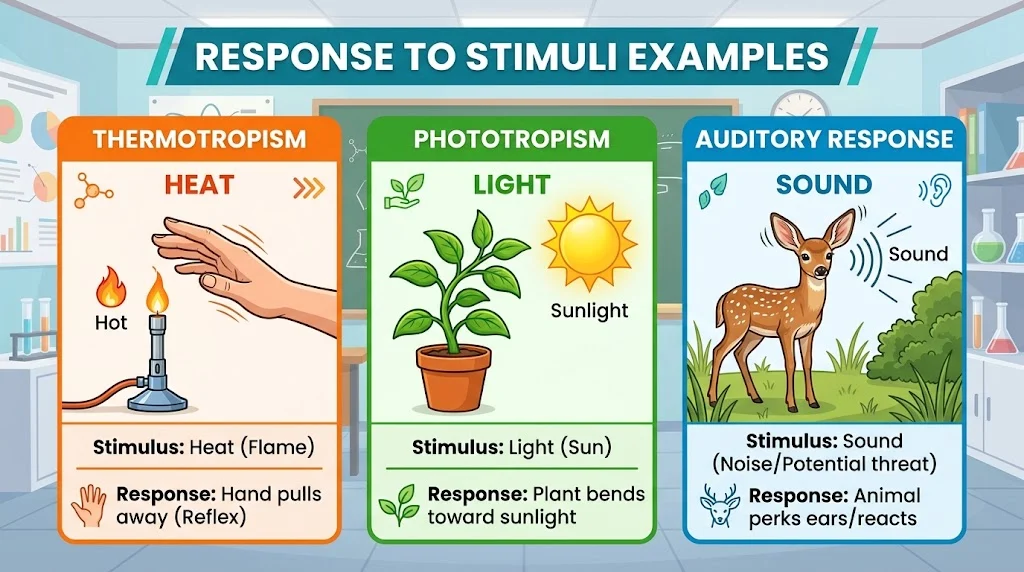
Response to stimuli examples show how a person, animal, plant, or living organism reacts to a change or signal from its surroundings. Common examples include pulling your hand away from something hot, blinking when something approaches your eye, or moving toward a pleasant smell.
Top examples: pulling away from heat, blinking at bright light, sweating in heat, moving toward food, shivering in cold
Your body and brain are reacting to things around you all day, even when you barely notice it. A loud noise makes you turn your head, bright sunlight makes you squint, and touching something hot can make you pull your hand away almost instantly. These everyday moments are simple examples of how living things respond to changes in their environment. You may also come across this idea in science classes, biology assignments, quizzes, or conversations about human behavior.
Understanding response to stimuli examples makes the concept much easier because you can connect a scientific idea to things you already experience. From human reflexes and animal behavior to plant movements and everyday reactions, there are plenty of easy examples to remember. Here is a clear, practical collection organized by situation so the concept feels simple instead of textbook-heavy.
Simple Human Responses
- Pulling your hand away from something hot.
Example: You touch a hot pan and quickly move your hand away.
Meaning: The body responds rapidly to a harmful temperature. - Blinking when something approaches your eye.
Example: A small object moves unexpectedly toward your face.
Meaning: Blinking helps protect the eye from potential contact. - Shivering when you feel cold.
Example: You start shaking slightly after standing outside in cold weather.
Meaning: The body reacts to low temperature. - Sweating when you get hot.
Example: You sweat after exercising on a warm day.
Meaning: The body responds to heat as part of temperature regulation. - Squinting in bright sunlight.
Example: You walk outside into strong sunlight and narrow your eyes.
Meaning: Your eyes respond to intense light. - Turning toward a loud sound.
Example: You hear a sudden noise behind you and look around.
Meaning: Your senses detect the sound and trigger an orienting response. - Sneezing after inhaling an irritant.
Example: Dust enters your nose and you sneeze.
Meaning: The body reacts to an irritant in the nasal passages. - Pulling your foot away from a sharp object.
Example: You accidentally step on something sharp and quickly move your foot.
Meaning: The nervous system helps produce a protective response. - Pupils becoming smaller in bright light.
Example: You move from a dark room into bright sunlight.
Meaning: The pupils adjust to changes in light intensity. - Feeling hungry when you smell food.
Example: The smell of freshly cooked food makes you feel hungry.
Meaning: Sensory information can influence physiological responses. - Salivating when thinking about food.
Example: You see or smell your favorite meal and your mouth starts watering.
Meaning: The body can respond to food-related cues. - Jumping after hearing a sudden bang.
Example: A door slams unexpectedly and you jump.
Meaning: The nervous system reacts to an unexpected sound. - Closing your eyes when dust blows toward them.
Example: Wind carries dust toward your face.
Meaning: The eyes respond protectively to possible irritation. - Breathing faster during exercise.
Example: You run quickly and your breathing becomes faster.
Meaning: The body responds to increased physical demand. - Heart rate increasing during excitement.
Example: You become very excited before an important event.
Meaning: Emotional stimulation can affect body functions.
Responses To Light
- Squinting in bright sunlight.
Example: You step outside at noon and immediately narrow your eyes.
Meaning: Your eyes respond to intense light. - Pupils constricting in bright conditions.
Example: A bright light enters your eyes.
Meaning: The pupils become smaller to regulate incoming light. - Pupils widening in darkness.
Example: You enter a dark room after being outside.
Meaning: The pupils adjust to allow more light into the eyes. - Blinking when exposed to sudden brightness.
Example: Someone turns on a bright light unexpectedly.
Meaning: The eyes respond automatically to sudden visual stimulation. - Looking away from an extremely bright source.
Example: You accidentally look toward a strong light.
Meaning: You naturally move your gaze away from uncomfortable stimulation. - Waking when sunlight enters the room.
Example: Morning sunlight shines through your curtains.
Meaning: Light can influence alertness and daily biological rhythms. - Plants growing toward light.
Example: A houseplant gradually bends toward a nearby window.
Meaning: Plants can respond to light direction. - A moth moving toward a light source.
Example: A moth flies toward a lamp at night.
Meaning: The animal’s behavior can be influenced by light. - Covering your eyes during a bright flash.
Example: A sudden camera flash catches you by surprise.
Meaning: The eyes and body respond to intense visual stimulation. - Adjusting your eyes when entering a dark room.
Example: You walk into a dim theater from a bright hallway.
Meaning: Your visual system adapts to reduced light. - Turning your head away from glare.
Example: Sunlight reflects strongly from a window.
Meaning: You reposition yourself to reduce uncomfortable stimulation. - Closing your eyes while looking toward the sun.
Example: You accidentally glance toward the sun.
Meaning: The eyes respond protectively to excessive brightness. - Animals becoming active around daylight.
Example: Some animals become more active as morning light appears.
Meaning: Light can influence animal activity patterns. - Night-active animals responding to darkness.
Example: An owl becomes active after sunset.
Meaning: Environmental light levels can influence behavior. - Leaves changing position toward sunlight.
Example: Leaves on a plant orient themselves toward a light source.
Meaning: Plants can alter growth or movement in response to light.
Responses To Touch
- Pulling your hand away from heat.
Example: You touch a hot object and immediately move your hand.
Meaning: Touch information can trigger a protective response. - Tickling causing laughter.
Example: Someone lightly tickles your arm.
Meaning: Touch can trigger an automatic or emotional response. - Closing your eyes when something touches your eyelashes.
Example: A small object brushes near your eye.
Meaning: The body reacts protectively to unexpected touch. - Moving away from an irritating texture.
Example: You touch something unpleasant and quickly move your hand.
Meaning: Sensory information influences your behavior. - Pulling away from a sharp object.
Example: You accidentally touch a sharp edge.
Meaning: The nervous system can initiate a protective withdrawal. - Feeling comfort from a gentle hug.
Example: A friend gives you a reassuring hug.
Meaning: Pleasant touch can influence emotional responses. - Touching something cold and reacting.
Example: You grab an ice-cold object unexpectedly.
Meaning: Temperature and touch receptors provide sensory information. - Moving your hand after an unexpected touch.
Example: Someone taps your shoulder without warning.
Meaning: Unexpected touch can capture attention. - Pulling your foot away from something uncomfortable.
Example: You step on a rough or sharp surface.
Meaning: Touch information can trigger avoidance. - A cat moving away from unwanted handling.
Example: A cat walks away when it dislikes being touched.
Meaning: Animals can change behavior in response to touch. - A snail retreating when touched.
Example: A snail pulls part of its body inward after contact.
Meaning: Physical contact can trigger a protective response. - Flinching after a sudden tap.
Example: Someone unexpectedly taps your shoulder.
Meaning: Sudden touch can trigger a quick reaction. - Moving closer to comforting touch.
Example: A child seeks a hug when feeling upset.
Meaning: Pleasant touch can provide emotional comfort. - Removing your hand from a rough surface.
Example: You touch a surface that feels unpleasant.
Meaning: Sensory information influences your movement. - Reacting to a sudden vibration.
Example: You feel a phone vibrating in your pocket.
Meaning: Physical stimulation quickly captures your attention.
Animal Responses To Stimuli
- A rabbit running away from danger.
Example: A rabbit notices a nearby predator and flees.
Meaning: The animal responds to a threat by avoiding it. - A dog barking at a stranger.
Example: A dog sees an unfamiliar person approaching.
Meaning: The animal responds to a potentially unfamiliar stimulus. - A cat hiding during a loud noise.
Example: A loud sound occurs and the cat moves to a hiding place.
Meaning: The animal responds to an unexpected environmental stimulus. - Birds flying away from sudden movement.
Example: A person moves quickly near a group of birds.
Meaning: Sudden movement can trigger an escape response. - Fish swimming away from danger.
Example: A fish detects a nearby threat and changes direction.
Meaning: The fish responds by avoiding the stimulus. - A dog wagging its tail when excited.
Example: A dog sees a familiar person it likes.
Meaning: The animal displays a behavioral response to a social stimulus. - A cat approaching food.
Example: A cat notices food being placed nearby.
Meaning: Food-related cues can influence movement. - A turtle pulling into its shell.
Example: A turtle senses a possible threat.
Meaning: It responds defensively by withdrawing. - A bird calling after hearing another bird.
Example: A bird hears a nearby call and responds vocally.
Meaning: Sound can influence animal communication. - A deer freezing after detecting danger.
Example: A deer notices something unusual nearby.
Meaning: Remaining still can be part of a defensive response. - A dog panting in hot weather.
Example: A dog becomes warm after spending time outside.
Meaning: The animal responds to increased temperature. - An insect flying toward a light source.
Example: A moth moves around a bright lamp at night.
Meaning: Light can influence insect movement. - A cat’s ears turning toward a sound.
Example: A cat hears something behind it.
Meaning: The ears orient toward the source of auditory stimulation. - A bird seeking shelter during a storm.
Example: A bird moves under cover when weather becomes severe.
Meaning: Environmental changes can influence animal behavior. - A dog moving toward a familiar scent.
Example: A dog follows a recognizable smell.
Meaning: Chemical cues can guide animal movement.
Plant Responses To Stimuli
- A plant growing toward sunlight.
Example: A window-side plant bends toward the brightest area.
Meaning: Plants can alter growth direction in response to light. - A Venus flytrap closing around prey.
Example: An insect triggers sensory structures on the plant.
Meaning: The plant responds to physical stimulation. - Roots growing toward water.
Example: Plant roots grow through soil where moisture is available.
Meaning: Root growth can respond to water gradients. - Roots growing downward.
Example: A seedling develops roots toward the soil.
Meaning: Gravity influences the direction of root growth. - Leaves closing in certain plants after touch.
Example: A sensitive plant folds its leaves after being touched.
Meaning: Physical contact can trigger movement. - Flowers opening in response to environmental conditions.
Example: Some flowers open during particular parts of the day.
Meaning: Plants can respond to changes in light and other conditions. - Leaves drooping when water is limited.
Example: A plant becomes limp after extended dryness.
Meaning: Water availability affects plant structure and function. - Roots responding to gravity.
Example: Roots generally grow downward while shoots grow upward.
Meaning: Plants respond to gravitational direction. - Shoots growing toward light.
Example: A plant placed near a window bends toward the light.
Meaning: Light influences shoot growth. - Tendrils wrapping around support.
Example: A climbing plant’s tendril contacts a support and coils around it.
Meaning: Touch can influence plant growth movement. - Leaves folding after contact.
Example: A sensitive plant’s leaflets close after being touched.
Meaning: Mechanical stimulation can produce plant movement. - Plants changing growth in response to gravity.
Example: A seedling’s roots grow downward while its shoot grows upward.
Meaning: Gravity helps guide plant growth patterns. - Seeds responding to moisture.
Example: A seed begins germination when suitable moisture conditions are present.
Meaning: Water availability can trigger biological processes. - Flowers responding to light cycles.
Example: Some plants open or close flowers depending on the time of day.
Meaning: Light conditions can influence plant behavior. - Plants responding to physical damage.
Example: A plant activates internal defenses after being damaged.
Meaning: Physical injury can trigger biological responses.
Reflex Responses
- Pulling your hand away from heat.
Example: You accidentally touch a hot surface.
Meaning: A rapid nervous-system response helps protect the body. - Knee-jerk response during a medical examination.
Example: A clinician taps below your kneecap.
Meaning: The nervous system can produce an involuntary leg movement. - Blinking when something approaches your eye.
Example: An object suddenly moves close to your face.
Meaning: The eyelids respond automatically to protect the eye. - Coughing after inhaling an irritant.
Example: Dust enters your airway.
Meaning: Coughing helps respond to airway irritation. - Sneezing after nasal irritation.
Example: Dust or another irritant enters your nose.
Meaning: Sneezing is a protective response to nasal stimulation. - Pupil adjustment to light.
Example: You move from darkness into bright light.
Meaning: The pupils automatically adjust to changing light conditions. - Gagging after an unpleasant stimulus.
Example: Something triggers the gag reflex at the back of your mouth.
Meaning: The reflex helps protect the airway. - Pulling away from a sharp object.
Example: Your skin contacts something sharp.
Meaning: The nervous system can quickly initiate withdrawal. - Startling after a sudden noise.
Example: Something unexpectedly crashes nearby.
Meaning: The body reacts rapidly to sudden stimulation. - Closing your eyes during an unexpected puff of air.
Example: Air suddenly moves toward your face.
Meaning: The eyes can respond protectively to unexpected stimulation. - Coughing when liquid enters the airway.
Example: You accidentally inhale while drinking.
Meaning: Coughing helps respond to airway irritation. - Blinking when the eye becomes irritated.
Example: An eyelash gets into your eye.
Meaning: Blinking helps protect and clear the eye. - Withdrawing from painful stimulation.
Example: You accidentally touch something that hurts.
Meaning: The body rapidly responds to potentially harmful stimulation. - Sudden movement after being startled.
Example: Someone unexpectedly appears behind you.
Meaning: The nervous system produces a quick involuntary reaction. - Tensing when expecting impact.
Example: You brace yourself when something suddenly moves toward you.
Meaning: The body prepares for a potentially threatening stimulus.
Environmental Responses
- Moving indoors during heavy rain.
Example: Rain suddenly becomes intense while you are outside.
Meaning: You change behavior in response to environmental conditions. - Seeking shade during extreme heat.
Example: You move under a covered area on a hot afternoon.
Meaning: You respond behaviorally to high temperature. - Wearing warm clothes in winter.
Example: You put on a coat before going outside.
Meaning: Your behavior adapts to cold surroundings. - Taking shelter during a storm.
Example: Strong winds and heavy rain begin unexpectedly.
Meaning: You respond to changing environmental conditions. - Animals moving before severe weather.
Example: Some animals change activity or shelter behavior when environmental conditions shift.
Meaning: Environmental cues can influence animal behavior. - Birds seeking shelter from strong wind.
Example: Birds move into protected areas during rough weather.
Meaning: They adjust behavior to reduce exposure. - Opening windows when a room becomes stuffy.
Example: You notice the room feels uncomfortable and open a window.
Meaning: You change your environment in response to conditions. - Moving away from smoke.
Example: Smoke enters the area where you are standing.
Meaning: You respond to an irritating environmental stimulus. - Using an umbrella in rain.
Example: You take an umbrella when rain begins.
Meaning: Your behavior changes because of weather conditions. - Seeking water during thirst.
Example: You get a drink after becoming thirsty.
Meaning: An internal condition influences behavior. - Turning on a light in darkness.
Example: You enter a dark room and switch on the light.
Meaning: Your behavior responds to low visibility. - Moving away from a loud construction area.
Example: Heavy machinery makes the surroundings uncomfortable.
Meaning: You alter your location to reduce unwanted stimulation. - Changing clothing during temperature changes.
Example: You remove a jacket when the weather becomes warmer.
Meaning: Behavior adjusts to environmental temperature. - Seeking shelter from direct sunlight.
Example: You move under a roof during intense midday sunlight.
Meaning: You respond to excessive heat and light. - Using hearing protection around loud machinery.
Example: You wear protective equipment in a very noisy environment.
Meaning: You adapt behavior to reduce exposure to intense sound.
Emotional Responses
- Smiling after receiving good news.
Example: A friend tells you something exciting.
Meaning: Positive information can produce an emotional response. - Crying after upsetting news.
Example: You receive information that makes you very sad.
Meaning: Emotional stimulation can produce visible responses. - Laughing at a funny joke.
Example: Someone tells you something genuinely funny.
Meaning: Humor can trigger an emotional and behavioral response. - Feeling nervous before an important event.
Example: You are about to give a major presentation.
Meaning: Anticipation can affect emotional and physical states. - Feeling surprised by unexpected news.
Example: Someone tells you something you did not expect.
Meaning: Novel information can trigger surprise. - Feeling frightened by a sudden noise.
Example: A loud sound happens unexpectedly.
Meaning: A threatening or surprising stimulus can produce fear. - Feeling happy after receiving praise.
Example: A teacher compliments your work.
Meaning: Positive social feedback can influence emotions. - Feeling embarrassed after making a mistake.
Example: You make an error in front of other people.
Meaning: Social situations can trigger emotional reactions. - Feeling calm after hearing reassuring news.
Example: Someone tells you that a problem has been resolved.
Meaning: Reassuring information can reduce emotional tension. - Feeling excited before a celebration.
Example: You are waiting for a special event to begin.
Meaning: Anticipation can produce excitement. - Feeling annoyed by repeated noise.
Example: A constant sound continues for a long time.
Meaning: Persistent stimulation can influence mood. - Feeling relieved when a problem ends.
Example: You finish something that had been worrying you.
Meaning: A change in circumstances can produce emotional relief. - Feeling startled by unexpected movement.
Example: Someone suddenly walks into your field of view.
Meaning: Unexpected stimulation can trigger a brief emotional reaction. - Feeling comforted by a familiar voice.
Example: Someone you trust speaks reassuringly to you.
Meaning: Familiar social cues can create emotional comfort. - Feeling motivated after encouragement.
Example: A friend encourages you before a difficult task.
Meaning: Positive social stimulation can influence motivation.
Everyday Responses
- Answering when your phone rings.
Example: Your phone starts ringing while you are nearby.
Meaning: The sound prompts you to respond. - Stopping when a traffic light turns red.
Example: You approach an intersection and see a red signal.
Meaning: Visual information influences your behavior. - Opening an umbrella when it starts raining.
Example: Rain begins while you are walking outside.
Meaning: You respond to a change in weather. - Moving aside when someone approaches.
Example: A person walks toward you in a narrow hallway.
Meaning: Visual information prompts a change in movement. - Waking when an alarm rings.
Example: Your alarm sounds in the morning.
Meaning: An auditory stimulus triggers a behavioral response. - Turning on a light when it gets dark.
Example: Evening arrives and your room becomes dim.
Meaning: Reduced light prompts you to change your environment. - Drinking water when thirsty.
Example: You notice your mouth feels dry after exercise.
Meaning: An internal condition motivates behavior. - Eating when hungry.
Example: You feel hungry after several hours without food.
Meaning: An internal stimulus influences your behavior. - Putting on a jacket when cold.
Example: You step outside and notice the temperature has dropped.
Meaning: Cold conditions influence your clothing choice. - Moving away from smoke.
Example: Smoke enters the room unexpectedly.
Meaning: An unpleasant environmental stimulus triggers avoidance. - Looking when someone calls your name.
Example: You hear your name from across a room.
Meaning: A familiar sound captures your attention. - Closing a window when it becomes too windy.
Example: Strong wind begins blowing through an open window.
Meaning: You modify your environment in response to changing conditions. - Wearing sunglasses in bright sunlight.
Example: You go outside on a very bright day.
Meaning: You respond to intense light by protecting your eyes. - Turning down loud music.
Example: Music becomes uncomfortable in volume.
Meaning: You reduce the intensity of an unwanted stimulus. - Moving closer to a heater when cold.
Example: You feel chilly while sitting indoors.
Meaning: You seek a warmer environment.
School-Friendly Examples
- A student blinking in bright sunlight.
Example: A student walks outside after leaving a dark classroom.
Meaning: The eyes respond to increased light. - A student pulling away from a hot beaker.
Example: A student accidentally touches a heated laboratory object.
Meaning: The body reacts protectively to heat. - A plant bending toward a window.
Example: A classroom plant grows toward available sunlight.
Meaning: The plant responds to light. - A person shivering in cold weather.
Example: A student waits outside during a cold morning.
Meaning: The body responds to low temperature. - A dog running after hearing a whistle.
Example: A trained dog hears a familiar whistle.
Meaning: Sound can trigger learned behavior. - A person sneezing after inhaling dust.
Example: Dust becomes airborne while a room is being cleaned.
Meaning: The body responds to nasal irritation. - A pupil changing size in different light.
Example: A person moves between bright and dark areas.
Meaning: The eyes adjust to changes in light intensity. - A sensitive plant folding after touch.
Example: Someone gently touches the leaves of a sensitive plant.
Meaning: Physical contact can trigger plant movement. - A rabbit running away from a predator.
Example: A rabbit detects a nearby threat.
Meaning: The animal responds through avoidance. - A person sweating during exercise.
Example: A student runs during physical education class.
Meaning: Increased activity and heat trigger sweating. - A person turning toward a loud sound.
Example: Something falls suddenly in a classroom.
Meaning: Hearing directs attention toward the sound. - A bird flying away after sudden movement.
Example: Someone approaches a bird too quickly.
Meaning: The bird responds to unexpected movement. - Roots growing toward moisture.
Example: A plant’s roots develop toward areas with available water.
Meaning: Water availability can influence root growth. - A person removing a hand from a sharp edge.
Example: Someone accidentally touches a sharp object.
Meaning: The nervous system triggers a protective response. - A flower opening in response to daylight.
Example: A flower opens during a particular part of the day.
Meaning: Environmental light can influence plant activity.
FAQs
What Is A Response To A Stimulus?
A response is a change in behavior, movement, or body activity that happens after an organism detects a stimulus.
What Is A Simple Example Of A Response To A Stimulus?
Pulling your hand away after touching something hot is a simple example. Heat acts as the stimulus, while moving your hand away is the response.
What Are Common Human Responses To Stimuli?
Common examples include blinking, sweating, shivering, sneezing, pulling away from pain, turning toward sounds, and adjusting to changes in light.
What Is A Plant Response To A Stimulus?
Plants can respond to light, gravity, water, touch, and other environmental changes. A plant bending toward sunlight is a familiar example.
What Is An Animal Response To A Stimulus?
Animals may run from danger, move toward food, respond to sounds, seek shelter, or change their behavior after detecting environmental information.
Conclusion
Learning about responses to stimuli becomes much easier when you connect the idea to ordinary moments. Blinking at bright light, pulling away from heat, shivering in cold weather, turning toward a sound, and watching a plant grow toward sunlight are all memorable examples. The key is to identify what changed first and then identify how the organism reacted.
Once you understand that simple pattern, biology questions become much less intimidating. Use these examples for studying, homework, revision, quizzes, or quick explanations. Save this guide for later, share it with a classmate, and come back whenever you need an easy example. Science is everywhere around you, and your everyday reactions are proof of it!
Discover More Related Articles:

4 thoughts on “Response to Stimuli Examples | Funny, Smart, Simple & Real-Life Examples In 2026”