Quick Answer
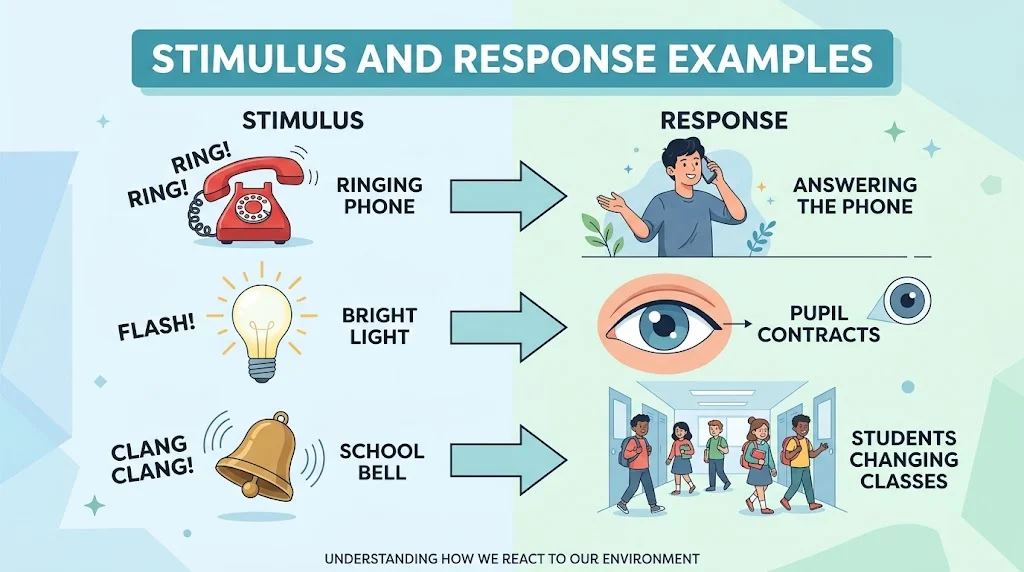
Stimulus and response describe how a person or organism reacts to something that happens around them or inside their body. A stimulus triggers a reaction, while the response is the reaction itself. You can use this concept to explain everyday behavior, psychology, communication, and real-life situations.
Top alternatives: stimulus-response examples, reaction to stimuli, human behavior responses, cause and effect examples, stimulus and reaction
Ever wondered why your phone buzzing makes you check it instantly, why a loud noise makes you jump, or why a funny message makes you laugh? These everyday moments are simple examples of stimulus and response. A stimulus is something that triggers a reaction, while a response is what happens afterward. The concept appears in psychology, biology, education, communication, and even ordinary conversations. Understanding it can help you recognize patterns in your behavior and explain why people react differently to the same situation.
From funny everyday examples to emotional reactions and professional situations, there are plenty of ways to understand this concept without making it sound like a science textbook. Whether you are studying for a test, preparing an assignment, or simply curious about human behavior, these examples will make stimulus and response easier to understand.
Funny Stimulus and Response Examples
- Stimulus: Your alarm rings. Response: You hit snooze.
Example: Use this when explaining why people struggle to wake up early.
Meaning: The alarm triggers a familiar morning reaction. - Stimulus: Someone says, “We need to talk.” Response: You immediately panic.
Example: Use this to describe a common reaction to an unexpected serious message.
Meaning: The phrase creates uncertainty and triggers anxiety. - Stimulus: Your phone buzzes. Response: You check it instantly.
Example: Use this when describing everyday phone habits.
Meaning: The notification prompts an immediate action. - Stimulus: You smell fresh pizza. Response: You suddenly feel hungry.
Example: Use this to explain how smells can influence behavior.
Meaning: The smell stimulates appetite. - Stimulus: Your favorite song plays. Response: You start dancing.
Example: Use this when describing music-related reactions.
Meaning: Familiar music can trigger excitement and movement. - Stimulus: Someone mentions free food. Response: You appear immediately.
Example: Use this as a humorous example among friends.
Meaning: The promise of food motivates a quick response. - Stimulus: Your teacher says, “Pop quiz.” Response: Everyone looks worried.
Example: Use this in a classroom example.
Meaning: Unexpected testing can trigger stress. - Stimulus: You see a funny meme. Response: You laugh out loud.
Example: Use this to explain reactions to online content.
Meaning: Humor triggers laughter. - Stimulus: Someone opens a bag of chips. Response: Everyone looks over.
Example: Use this when describing reactions to familiar sounds.
Meaning: The sound attracts attention. - Stimulus: Your favorite creator posts a new video. Response: You click immediately.
Example: Use this when discussing social media habits.
Meaning: Interest encourages quick engagement. - Stimulus: Your Wi-Fi stops working. Response: You stare at the router.
Example: Use this as a relatable technology joke.
Meaning: An interruption prompts an attempt to identify the problem. - Stimulus: Someone says your name across the room. Response: You turn around.
Example: Use this in a basic behavioral example.
Meaning: Hearing your name directs your attention. - Stimulus: You see a long assignment. Response: You suddenly need a snack.
Example: Use this to joke about procrastination.
Meaning: A demanding task may encourage distraction. - Stimulus: Your favorite team scores. Response: You cheer loudly.
Example: Use this when explaining sports-related emotions.
Meaning: An exciting event triggers celebration. - Stimulus: Your phone battery reaches one percent. Response: You search for a charger.
Example: Use this when describing everyday problem-solving.
Meaning: A warning sign motivates action.
Simple Stimulus and Response Examples
- Stimulus: A doorbell rings. Response: You open the door.
Example: Use this in a basic school assignment.
Meaning: The sound signals that someone may be at the door. - Stimulus: Rain begins falling. Response: You open an umbrella.
Example: Use this to explain a practical response to weather.
Meaning: Rain encourages protective action. - Stimulus: You feel cold. Response: You put on a jacket.
Example: Use this when discussing temperature and behavior.
Meaning: Cold conditions prompt an attempt to stay warm. - Stimulus: You feel thirsty. Response: You drink water.
Example: Use this in a biology lesson.
Meaning: Thirst motivates drinking. - Stimulus: A traffic light turns red. Response: A driver stops.
Example: Use this to explain responses to visual signals.
Meaning: The signal prompts a safety-related action. - Stimulus: You hear a phone ringing. Response: You answer it.
Example: Use this when discussing communication.
Meaning: The sound signals an incoming call. - Stimulus: A bright light shines in your eyes. Response: You blink.
Example: Use this in a lesson about sensory reactions.
Meaning: The eyes react to a strong light stimulus. - Stimulus: You smell smoke. Response: You investigate safely or leave the area.
Example: Use this when explaining responses to potential danger.
Meaning: The smell alerts you to a possible hazard. - Stimulus: You hear applause. Response: You smile.
Example: Use this in a social situation.
Meaning: Positive feedback can trigger happiness. - Stimulus: You touch a cold surface. Response: You notice the cold sensation.
Example: Use this to describe sensory perception.
Meaning: Temperature receptors help you detect cold. - Stimulus: You see a question on a test. Response: You begin writing an answer.
Example: Use this in an educational setting.
Meaning: The question prompts a task-related action. - Stimulus: Your stomach feels empty. Response: You look for food.
Example: Use this in a basic biology explanation.
Meaning: Hunger can motivate food-seeking behavior. - Stimulus: You receive a compliment. Response: You say thank you.
Example: Use this when describing social etiquette.
Meaning: The compliment prompts a polite response. - Stimulus: A timer rings. Response: You stop cooking.
Example: Use this in a practical household example.
Meaning: The sound signals that the set time has ended. - Stimulus: You see an obstacle on the sidewalk. Response: You walk around it.
Example: Use this when explaining how people respond to their surroundings.
Meaning: Visual information guides movement.
Psychological Stimulus and Response Examples
- Stimulus: Someone praises your work. Response: You feel encouraged.
Example: Use this when discussing motivation.
Meaning: Positive feedback may strengthen confidence and effort. - Stimulus: You receive unexpected criticism. Response: You feel defensive.
Example: Use this when describing emotional reactions.
Meaning: Criticism can trigger a protective response. - Stimulus: You hear a familiar childhood song. Response: You remember an old memory.
Example: Use this in a psychology discussion.
Meaning: Familiar sounds can activate associated memories. - Stimulus: You enter a room full of strangers. Response: You feel nervous.
Example: Use this when discussing social anxiety.
Meaning: An unfamiliar social environment may trigger nervousness. - Stimulus: A friend smiles at you. Response: You smile back.
Example: Use this when explaining social behavior.
Meaning: Facial expressions can influence another person’s expression. - Stimulus: You receive a good grade. Response: You feel proud.
Example: Use this in a discussion about achievement.
Meaning: Positive results can produce feelings of accomplishment. - Stimulus: You remember an embarrassing moment. Response: You blush.
Example: Use this to describe an emotional and physical reaction.
Meaning: Embarrassment can produce visible bodily changes. - Stimulus: You hear an unexpected bang. Response: You startle.
Example: Use this when explaining the startle response.
Meaning: A sudden sound can trigger an automatic reaction. - Stimulus: You face a difficult decision. Response: You think through your options.
Example: Use this when discussing problem-solving.
Meaning: A challenge prompts deliberate thinking. - Stimulus: You receive an encouraging message. Response: You feel hopeful.
Example: Use this in a discussion about emotional support.
Meaning: Reassuring communication may improve someone’s mood. - Stimulus: You experience repeated interruptions. Response: You become frustrated.
Example: Use this when discussing attention and emotions.
Meaning: Disruptions can make concentration more difficult. - Stimulus: You see a threatening situation. Response: You become alert.
Example: Use this when explaining the body’s stress response.
Meaning: Perceived danger can increase vigilance. - Stimulus: You complete a challenging task. Response: You feel satisfied.
Example: Use this when discussing achievement and motivation.
Meaning: Accomplishment can create a sense of reward. - Stimulus: Someone listens carefully to you. Response: You feel understood.
Example: Use this when describing supportive communication.
Meaning: Attentive listening can encourage emotional connection. - Stimulus: You repeatedly practice a skill. Response: Your performance improves.
Example: Use this when explaining learning through practice.
Meaning: Repetition and feedback can strengthen a skill.
Biological Stimulus and Response Examples
- Stimulus: Bright sunlight reaches your eyes. Response: Your pupils become smaller.
Example: Use this in a biology assignment about the eye.
Meaning: Pupillary constriction helps regulate the amount of light entering the eye. - Stimulus: You touch something painfully hot. Response: You quickly pull your hand away.
Example: Use this when explaining a withdrawal reflex.
Meaning: A protective neural pathway helps move the body away from harmful heat. - Stimulus: Your body temperature rises. Response: You begin sweating.
Example: Use this in a lesson about thermoregulation.
Meaning: Sweating helps cool the body. - Stimulus: Your body becomes too cold. Response: You begin shivering.
Example: Use this when discussing temperature regulation.
Meaning: Muscle activity generates heat. - Stimulus: Food enters your mouth. Response: Saliva production increases.
Example: Use this in a biology lesson about digestion.
Meaning: Saliva helps moisten food and begin digestion. - Stimulus: Dust irritates your nose. Response: You sneeze.
Example: Use this to explain protective reflexes.
Meaning: Sneezing helps expel irritants from the nasal passages. - Stimulus: Your blood glucose rises after eating. Response: Insulin release increases.
Example: Use this when studying hormonal regulation.
Meaning: Insulin helps regulate blood glucose levels. - Stimulus: You exercise vigorously. Response: Your breathing rate increases.
Example: Use this in a lesson about body systems.
Meaning: The body increases ventilation to meet changing oxygen and carbon dioxide demands. - Stimulus: Your muscles need more oxygen during activity. Response: Your heart rate increases.
Example: Use this when studying circulation.
Meaning: A faster heartbeat helps deliver blood to active tissues. - Stimulus: You smell food. Response: Digestive activity may begin to increase.
Example: Use this in a lesson about digestion.
Meaning: Sensory cues can prepare the digestive system for food. - Stimulus: Your blood pressure drops when you stand up. Response: Your body adjusts heart rate and blood vessel tone.
Example: Use this when studying homeostasis.
Meaning: These adjustments help maintain blood flow to the brain. - Stimulus: A doctor taps the tendon below your kneecap. Response: Your lower leg kicks forward.
Example: Use this when learning about reflexes.
Meaning: The knee-jerk reflex involves a rapid spinal response. - Stimulus: Your body detects dehydration. Response: You may feel thirsty.
Example: Use this in a biology lesson about fluid balance.
Meaning: Thirst encourages fluid intake. - Stimulus: A person encounters a familiar food smell. Response: Their mouth may begin watering.
Example: Use this when discussing sensory cues.
Meaning: Smell can activate anticipatory digestive responses. - Stimulus: A sudden movement appears in your peripheral vision. Response: You turn your eyes or head toward it.
Example: Use this when explaining attention and sensory processing.
Meaning: The movement attracts attention and prompts orientation.
Classroom Stimulus and Response Examples
- Stimulus: The teacher asks a question. Response: A student raises a hand.
Example: Use this in a classroom behavior worksheet.
Meaning: The question prompts a participation response. - Stimulus: The school bell rings. Response: Students leave the classroom.
Example: Use this when explaining classroom routines.
Meaning: The bell signals a change in activity. - Stimulus: A student receives positive feedback. Response: They participate more confidently.
Example: Use this in an education assignment.
Meaning: Encouragement may support participation. - Stimulus: The teacher displays a picture. Response: Students identify what they see.
Example: Use this when describing visual learning activities.
Meaning: The picture provides information that prompts a response. - Stimulus: A worksheet contains a difficult question. Response: A student asks for help.
Example: Use this when discussing learning strategies.
Meaning: Difficulty can prompt help-seeking behavior. - Stimulus: A classmate shares an idea. Response: Another student adds a suggestion.
Example: Use this during a group-work activity.
Meaning: One contribution can encourage another. - Stimulus: The teacher gives a clear instruction. Response: Students begin the task.
Example: Use this in a lesson about classroom communication.
Meaning: Instructions guide behavior. - Stimulus: A student earns recognition for effort. Response: They feel motivated to continue.
Example: Use this in a discussion about learning motivation.
Meaning: Recognition can reinforce effort. - Stimulus: A classroom becomes noisy. Response: The teacher signals for quiet.
Example: Use this when explaining classroom management.
Meaning: Noise prompts an attempt to restore order. - Stimulus: A student sees an unfamiliar word. Response: They look it up.
Example: Use this when describing independent learning.
Meaning: An information gap prompts a search for meaning. - Stimulus: The teacher announces a group project. Response: Students organize their roles.
Example: Use this in a teamwork example.
Meaning: The assignment prompts planning. - Stimulus: A student makes a mistake. Response: They correct their answer after feedback.
Example: Use this when discussing learning from mistakes.
Meaning: Feedback helps guide improvement. - Stimulus: A timer signals the end of an activity. Response: Students put away their materials.
Example: Use this in a classroom routine.
Meaning: The signal prompts a transition. - Stimulus: A student receives a confusing instruction. Response: They ask the teacher to clarify it.
Example: Use this when discussing effective communication.
Meaning: Uncertainty prompts a request for clarification. - Stimulus: A student practices multiplication daily. Response: They solve familiar problems more quickly.
Example: Use this when explaining skill development.
Meaning: Practice can improve speed and accuracy.
Social Stimulus and Response Examples
- Stimulus: A friend waves at you. Response: You wave back.
Example: Use this to describe a common social interaction.
Meaning: A friendly gesture prompts a similar response. - Stimulus: Someone says hello. Response: You greet them.
Example: Use this when discussing everyday manners.
Meaning: A greeting usually invites acknowledgment. - Stimulus: A person compliments your outfit. Response: You thank them.
Example: Use this in a social-skills activity.
Meaning: A compliment prompts polite acknowledgment. - Stimulus: A friend shares exciting news. Response: You congratulate them.
Example: Use this when explaining supportive behavior.
Meaning: Their positive news prompts encouragement. - Stimulus: Someone interrupts you. Response: You ask them to let you finish.
Example: Use this in a communication example.
Meaning: The interruption prompts you to set a conversational boundary. - Stimulus: A colleague offers help. Response: You accept or politely decline.
Example: Use this in a workplace communication lesson.
Meaning: An offer invites a decision. - Stimulus: A friend looks upset. Response: You ask whether they are okay.
Example: Use this when describing empathy.
Meaning: Observing emotional cues prompts concern. - Stimulus: Someone shares a joke. Response: You laugh if you find it funny.
Example: Use this when explaining conversational reactions.
Meaning: Humor can trigger laughter. - Stimulus: A person apologizes. Response: You acknowledge the apology.
Example: Use this in a conflict-resolution example.
Meaning: An apology invites a response that may help repair the interaction. - Stimulus: Someone asks for directions. Response: You explain the route.
Example: Use this when discussing helpful behavior.
Meaning: A request prompts an informative response. - Stimulus: A friend invites you to an event. Response: You accept or decline.
Example: Use this in an everyday communication exercise.
Meaning: An invitation prompts a decision. - Stimulus: Someone expresses a different opinion. Response: You discuss the disagreement respectfully.
Example: Use this when teaching constructive conversation.
Meaning: Different viewpoints can prompt discussion. - Stimulus: A group member offers an idea. Response: The group considers it.
Example: Use this in a teamwork example.
Meaning: A contribution invites evaluation. - Stimulus: Someone thanks you. Response: You say, “You’re welcome.”
Example: Use this in a lesson about social conventions.
Meaning: Gratitude prompts acknowledgment. - Stimulus: A person asks a personal question. Response: You decide how much to share.
Example: Use this when discussing boundaries.
Meaning: A personal question prompts a choice about disclosure.
Emotional Stimulus and Response Examples
- Stimulus: You receive disappointing news. Response: You feel sad.
Example: Use this when discussing emotional reactions.
Meaning: Disappointment can trigger sadness. - Stimulus: Someone surprises you with a thoughtful gift. Response: You feel happy.
Example: Use this in a discussion about positive emotions.
Meaning: A pleasant surprise can create happiness. - Stimulus: You hear an encouraging message. Response: You feel hopeful.
Example: Use this when discussing emotional support.
Meaning: Encouragement can increase optimism. - Stimulus: A friend breaks a promise. Response: You feel disappointed.
Example: Use this when explaining reactions to unmet expectations.
Meaning: Broken trust can trigger disappointment. - Stimulus: You finish a challenging project. Response: You feel proud.
Example: Use this in a personal-development example.
Meaning: Accomplishment can create pride. - Stimulus: Someone ignores your message. Response: You may feel confused.
Example: Use this when discussing digital communication.
Meaning: Uncertainty about another person’s behavior may cause confusion. - Stimulus: You see a touching reunion. Response: You feel emotional.
Example: Use this when discussing empathy.
Meaning: Emotionally meaningful events can affect your feelings. - Stimulus: You receive unexpected praise. Response: You smile.
Example: Use this when explaining reactions to positive feedback.
Meaning: Praise can produce a positive emotional response. - Stimulus: You remember a difficult experience. Response: You may feel uneasy.
Example: Use this when discussing memory and emotion.
Meaning: Memories can bring back associated feelings. - Stimulus: Someone treats you unfairly. Response: You feel frustrated.
Example: Use this when discussing social emotions.
Meaning: Perceived unfairness can trigger frustration. - Stimulus: You hear reassuring news. Response: You feel relieved.
Example: Use this when explaining relief.
Meaning: Reassurance can reduce uncertainty. - Stimulus: A friend celebrates your success. Response: You feel appreciated.
Example: Use this in a discussion about friendship.
Meaning: Shared celebration can strengthen feelings of belonging. - Stimulus: You make a mistake in public. Response: You feel embarrassed.
Example: Use this when describing common emotional reactions.
Meaning: Being noticed during a mistake can trigger embarrassment. - Stimulus: Someone offers a sincere apology. Response: You may feel calmer.
Example: Use this when discussing conflict resolution.
Meaning: An apology may reduce tension. - Stimulus: You receive a kind message on a difficult day. Response: You feel supported.
Example: Use this in a discussion about social support.
Meaning: Kind communication can help someone feel cared for.
Workplace Stimulus and Response Examples
- Stimulus: Your manager gives clear instructions. Response: You begin the task.
Example: Use this in a workplace training example.
Meaning: Clear guidance supports action. - Stimulus: A deadline approaches. Response: You organize your priorities.
Example: Use this when discussing time management.
Meaning: Time pressure prompts planning. - Stimulus: A colleague asks for assistance. Response: You offer help if available.
Example: Use this in a teamwork exercise.
Meaning: A request can prompt cooperation. - Stimulus: You receive constructive feedback. Response: You adjust your work.
Example: Use this when discussing professional development.
Meaning: Feedback can guide improvement. - Stimulus: A customer reports a problem. Response: You investigate the issue.
Example: Use this in customer-service training.
Meaning: A complaint prompts problem-solving. - Stimulus: A meeting invitation arrives. Response: You check your calendar.
Example: Use this when explaining workplace routines.
Meaning: The invitation prompts scheduling. - Stimulus: A team reaches a milestone. Response: Members celebrate the achievement.
Example: Use this in a team-building example.
Meaning: Progress encourages recognition. - Stimulus: A project requirement changes. Response: You revise the plan.
Example: Use this in project management.
Meaning: New information prompts adaptation. - Stimulus: An important email arrives. Response: You read and prioritize it.
Example: Use this when discussing communication management.
Meaning: The message prompts attention and evaluation. - Stimulus: A coworker shares useful information. Response: You update your approach.
Example: Use this in a collaboration example.
Meaning: New knowledge can influence decisions. - Stimulus: A presentation begins. Response: The audience listens.
Example: Use this in a professional communication lesson.
Meaning: The start of a presentation signals the audience to focus. - Stimulus: A computer displays an error message. Response: You troubleshoot the problem.
Example: Use this when discussing workplace problem-solving.
Meaning: An error prompts corrective action. - Stimulus: Your supervisor recognizes your effort. Response: You feel motivated.
Example: Use this in a discussion about workplace motivation.
Meaning: Recognition can encourage continued effort. - Stimulus: A client requests clarification. Response: You explain the details.
Example: Use this in customer communication.
Meaning: A question prompts an explanation. - Stimulus: A safety alarm sounds. Response: Workers follow the established safety procedure.
Example: Use this in workplace safety training.
Meaning: The alarm signals the need for an appropriate safety response.
Stimulus and Response Examples in Everyday Technology
- Stimulus: Your phone displays a low-battery warning. Response: You connect it to a charger.
Example: Use this when describing device-related behavior.
Meaning: The warning prompts an action to preserve battery power. - Stimulus: A navigation app announces a turn. Response: You check the route.
Example: Use this when explaining responses to digital directions.
Meaning: The notification helps guide navigation. - Stimulus: A message notification appears. Response: You open the messaging app.
Example: Use this in a digital-behavior example.
Meaning: The notification attracts attention. - Stimulus: A website displays an error. Response: You refresh the page.
Example: Use this when discussing troubleshooting.
Meaning: The error prompts an attempt to restore the page. - Stimulus: A password is rejected. Response: You check your credentials.
Example: Use this in a technology lesson.
Meaning: The rejection prompts verification. - Stimulus: A calendar reminder appears. Response: You prepare for the appointment.
Example: Use this when explaining productivity tools.
Meaning: The reminder prompts preparation. - Stimulus: A video starts playing. Response: You adjust the volume.
Example: Use this in a technology example.
Meaning: The sound level prompts an adjustment. - Stimulus: A suspicious email arrives. Response: You check its legitimacy before interacting.
Example: Use this in a digital-safety lesson.
Meaning: A possible warning sign prompts caution. - Stimulus: A computer overheats. Response: You stop demanding tasks and check ventilation.
Example: Use this when explaining basic troubleshooting.
Meaning: Excessive heat prompts corrective action. - Stimulus: A software update notification appears. Response: You review the update options.
Example: Use this when discussing device maintenance.
Meaning: The notification prompts a decision. - Stimulus: A social media post receives a comment. Response: The author replies.
Example: Use this in a communication example.
Meaning: The comment invites engagement. - Stimulus: A video buffers repeatedly. Response: You check your internet connection.
Example: Use this when explaining common online frustrations.
Meaning: Playback interruptions prompt troubleshooting. - Stimulus: A smart speaker hears its activation phrase. Response: It begins listening for a request.
Example: Use this when discussing voice-controlled devices.
Meaning: The activation phrase triggers a programmed response. - Stimulus: A smoke detector senses smoke. Response: It sounds an alarm.
Example: Use this in a safety-related technology example.
Meaning: The sensor triggers a warning signal. - Stimulus: A motion sensor detects movement. Response: A connected light turns on.
Example: Use this when describing automated systems.
Meaning: The detected movement triggers a programmed action.
Stimulus and Response Examples in Classical and Operant Conditioning
- Stimulus: A bell repeatedly accompanies food for a dog. Response: The dog eventually salivates to the bell alone.
Example: Use this when explaining classical conditioning.
Meaning: Through repeated association, a previously neutral sound can become a conditioned stimulus. - Stimulus: A dog hears a clicker followed by a treat during training. Response: The dog learns to associate the click with a reward.
Example: Use this in an animal-training lesson.
Meaning: The click becomes a signal associated with reinforcement. - Stimulus: A student receives praise after completing homework. Response: The student may become more likely to complete similar tasks.
Example: Use this when explaining positive reinforcement.
Meaning: A rewarding consequence can increase a behavior. - Stimulus: A driver hears a seat-belt warning. Response: The driver fastens the seat belt.
Example: Use this when discussing behavior shaped by warnings.
Meaning: The warning can prompt a safety action. - Stimulus: A child receives attention after asking politely. Response: The child may use polite requests more often.
Example: Use this in a parenting or education example.
Meaning: Attention can reinforce a behavior. - Stimulus: A student loses access to a preferred activity after breaking an agreed rule. Response: The student may follow the rule more consistently.
Example: Use this when explaining consequences in learning.
Meaning: A consequence can influence the future likelihood of behavior. - Stimulus: A person experiences a loud noise after pressing a particular button. Response: They avoid pressing it again.
Example: Use this as a hypothetical example of learning from consequences.
Meaning: An unpleasant consequence may discourage a behavior. - Stimulus: A notification sound accompanies a message. Response: You learn to check your phone when the sound occurs.
Example: Use this when discussing learned associations.
Meaning: Repeated pairing can create an expectation that a message has arrived. - Stimulus: A teacher gives feedback after a practice question. Response: A student corrects similar mistakes.
Example: Use this in a learning and feedback example.
Meaning: Feedback can shape future performance. - Stimulus: A person practices a piano passage and hears the correct notes. Response: They repeat the successful pattern.
Example: Use this when discussing skill acquisition.
Meaning: Successful practice provides information that guides repetition. - Stimulus: A dog sits and receives a treat. Response: Sitting may occur more often during training.
Example: Use this in a basic operant-conditioning lesson.
Meaning: The reward reinforces sitting behavior. - Stimulus: A person receives a reminder before an appointment. Response: They leave home on time.
Example: Use this when explaining how cues support habits.
Meaning: The reminder helps prompt a planned action. - Stimulus: A learner receives immediate correction after a wrong answer. Response: They reconsider the answer.
Example: Use this when discussing feedback in education.
Meaning: Corrective information can influence later responses. - Stimulus: A runner hears a starting signal. Response: They begin running.
Example: Use this in a sports-training example.
Meaning: A learned signal cues the start of an activity. - Stimulus: A person receives a reward after consistently practicing a habit. Response: They may continue the habit.
Example: Use this when explaining reinforcement.
Meaning: Rewarding outcomes can support repeated behavior.
FAQs
What Does Stimulus and Response Mean?
A stimulus is an event, signal, or change that triggers a reaction. A response is the reaction that follows. For example, a loud sound is the stimulus, and turning toward it is the response.
What Is a Simple Example of Stimulus and Response?
A phone ringing is the stimulus, and answering the phone is the response. The sound prompts an action.
What Is the Difference Between Stimulus and Response?
The stimulus is what triggers or influences a reaction. The response is what the person, animal, or organism does or experiences afterward.
What Are Stimulus and Response Examples in Psychology?
Examples include feeling nervous before a presentation, smiling after receiving a compliment, or turning toward an unexpected sound. The response can be emotional, physical, or behavioral.
What Is Stimulus and Response in Biology?
In biology, a stimulus is a change in an organism’s internal or external environment. A response is the organism’s reaction, such as sweating when hot or withdrawing from a painful stimulus.
Conclusion
Stimulus and response are part of everyday life, from answering a ringing phone to reacting to a sudden sound or learning from feedback. Once you understand the difference, it becomes much easier to recognize how your surroundings influence your actions, feelings, and decisions. These examples can help with school assignments, psychology lessons, biology revision, and real-world observations.
Remember that not every response is automatic, and the same situation can affect different people in different ways. Use these examples as a starting point, create a few of your own, and notice how the concept appears throughout your day. Save this guide for studying, share it with classmates, and keep learning through everyday examples.
Discover More Related Articles:
- 422 Response Code | Clever, Professional & Creative Responses In 2026
- Childhood Trauma Responses in Adults | Emotional Signs, Behaviors & Real-Life Examples In 2026
