Quick Answer
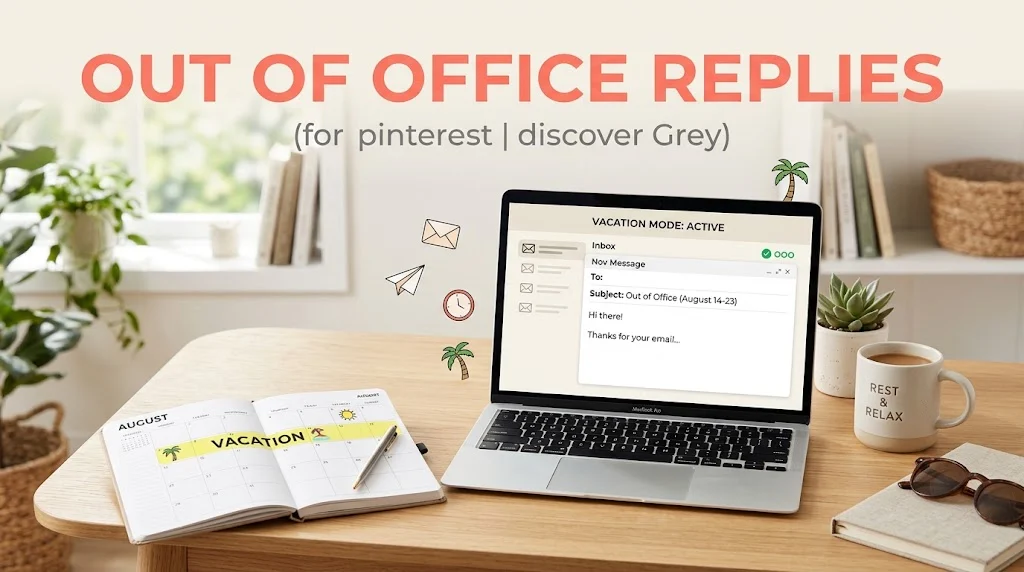
Out of office replies let people know you are unavailable, when you will return, and who they can contact while you are away. The best message is clear, friendly, and appropriate for your workplace, whether you are taking a vacation, enjoying a long weekend, or simply logging off.
Top alternatives: Professional out of office message, funny out of office reply, vacation auto-reply, short absence message, out of office email template
Everyone deserves a break from emails, meetings, and that never-ending notification count. But before you close your laptop and disappear into vacation mode, there is one little task to handle: your out of office reply. Whether you are heading to the beach, taking a sick day, attending a family event, or enjoying a much-needed digital detox, the right message keeps people informed without making your absence sound like a corporate announcement.
A professional response works well for clients, while a funny one can make coworkers smile. You can even keep things short if you prefer not to share personal details. The goal is simple: explain that you are unavailable, provide a return date when possible, and direct urgent requests to the right person. Here are ready-to-use options for every mood, workplace, and situation.
Funny Out of Office Replies
- “I’m currently out of office and accepting absolutely no meetings with my inbox.”
Example: Use this when your workplace culture allows a little humor during vacation.
Meaning: You are taking a break from work communications. - “Gone fishing. Emails can wait.”
Example: Use this for a casual vacation auto-reply.
Meaning: You are away and will respond later. - “My laptop and I are taking some personal space.”
Example: Use this when you want a playful message for coworkers.
Meaning: You are temporarily disconnecting from work. - “I’m out of office, living my main-character moment.”
Example: Use this before a vacation or long weekend.
Meaning: You are enjoying time away from your regular routine. - “Currently unavailable because my calendar finally said, ‘Go touch grass.’”
Example: Use this in a relaxed, friendly workplace.
Meaning: You are stepping away from work to recharge. - “I have left the building. Please direct all emails to the void.”
Example: Use this as an intentionally dramatic internal reply.
Meaning: You are jokingly announcing your absence. - “Out of office. My professional personality will return soon.”
Example: Use this when your coworkers appreciate playful humor.
Meaning: You are temporarily away from your work responsibilities. - “I’m away from my desk, probably thinking about snacks.”
Example: Use this for a lighthearted team message.
Meaning: You are unavailable and enjoying your downtime. - “My inbox is on read until I return.”
Example: Use this with colleagues who understand internet slang.
Meaning: You will not be checking or answering messages for now. - “Currently offline and dramatically enjoying it.”
Example: Use this before a planned digital break.
Meaning: You are happy to disconnect from work. - “I’m out of office. Please hold your applause until my return.”
Example: Use this when your team enjoys playful announcements.
Meaning: You are humorously highlighting your time away. - “I have entered airplane mode, emotionally and possibly literally.”
Example: Use this when traveling on vacation.
Meaning: You are taking a break from everyday communication. - “My inbox and I are working through some boundaries.”
Example: Use this when taking a proper break from emails.
Meaning: You are limiting work communication during your absence. - “Away today. Please do not feed the email monster.”
Example: Use this in a friendly internal auto-reply.
Meaning: You are joking about the number of emails that may accumulate. - “I’ll be back before my inbox files a missing-person report.”
Example: Use this for a short planned absence.
Meaning: You expect to return and catch up on messages.
Professional Out of Office Replies
- “Thank you for your email. I am currently out of the office and will respond upon my return.”
Example: Use this for clients or business contacts.
Meaning: You are unavailable and will follow up later. - “I am away from the office until [return date]. I will respond as soon as possible after I return.”
Example: Use this when your absence has a confirmed end date.
Meaning: You are providing a clear timeline for your response. - “Thank you for reaching out. I will have limited access to email during my absence.”
Example: Use this when you may occasionally check messages.
Meaning: Your response may take longer than usual. - “I am currently unavailable. For urgent matters, please contact [colleague’s name] at [email address].”
Example: Use this when a teammate is covering urgent requests.
Meaning: You are directing important matters to an alternative contact. - “I appreciate your message and will reply when I return to the office.”
Example: Use this for a polite, general-purpose auto-reply.
Meaning: You acknowledge the email and explain the delay. - “I am out of the office through [date] and will resume responding on [date].”
Example: Use this when you want to state your schedule clearly.
Meaning: You are setting expectations about your availability. - “Thank you for your patience while I am away. I will follow up upon my return.”
Example: Use this when communicating with clients about pending requests.
Meaning: You appreciate their understanding. - “I am currently away from work and unable to respond to emails promptly.”
Example: Use this when you expect a delay but do not want to provide personal details.
Meaning: You are temporarily unavailable. - “Your message is important to me. I will respond as soon as my schedule permits after my return.”
Example: Use this when a courteous, professional tone is important.
Meaning: You intend to follow up when available. - “I am away from the office and will not be monitoring email regularly.”
Example: Use this when you will not be checking your inbox consistently.
Meaning: You are warning senders not to expect an immediate response. - “Thank you for your inquiry. I will review your message when I return.”
Example: Use this for business inquiries and professional correspondence.
Meaning: You plan to review the message after your absence. - “I am currently on leave and will return on [date]. Please contact [name] for time-sensitive requests.”
Example: Use this when a colleague is handling important work.
Meaning: You are explaining your absence and providing an alternative contact. - “I appreciate your email. My response may be delayed until I am back in the office.”
Example: Use this when you cannot guarantee a specific reply date.
Meaning: You are setting realistic expectations. - “I am away from my desk until [date]. For assistance during this period, please contact [team or department].”
Example: Use this when an entire team can help.
Meaning: You are directing senders to the appropriate support channel. - “Thank you for contacting me. I will respond to your message as soon as I am available again.”
Example: Use this as a professional reply without detailed scheduling information.
Meaning: You will follow up when you are available.
Short Out of Office Replies
- “Out of office until [date].”
Example: Use this for a minimal automatic email response.
Meaning: You are unavailable until the stated date. - “Away today. Back tomorrow.”
Example: Use this for a one-day absence.
Meaning: You expect to return the next day. - “Currently away. I’ll reply when I return.”
Example: Use this when you want to keep the message simple.
Meaning: You will respond after your absence. - “On leave until [date].”
Example: Use this for a straightforward workplace auto-reply.
Meaning: You are taking leave through the specified date. - “Thanks for your email. I’ll be in touch soon.”
Example: Use this when the exact return date is not necessary.
Meaning: You acknowledge the message and plan to follow up. - “Offline for now. Back soon.”
Example: Use this for a casual internal message.
Meaning: You are temporarily unavailable. - “I’m away from email today.”
Example: Use this when you are unavailable for the day.
Meaning: You are not checking your inbox. - “Away on vacation. Returning [date].”
Example: Use this for a vacation auto-reply.
Meaning: You are on vacation until the stated date. - “Currently unavailable. Please contact [name] for urgent help.”
Example: Use this when someone else can handle urgent work.
Meaning: You are redirecting important requests. - “I’ll respond after I’m back.”
Example: Use this for a short, direct response.
Meaning: You will handle the email later. - “Out today. Thank you for understanding.”
Example: Use this for a brief absence notification.
Meaning: You are away for the day and appreciate the sender’s patience. - “Taking a short break. Back shortly.”
Example: Use this for a temporary absence from online communication.
Meaning: You expect to become available again soon. - “Away from work until further notice.”
Example: Use this when you cannot yet confirm a return date.
Meaning: Your availability is uncertain. - “I’m currently on leave. Thanks for your patience.”
Example: Use this for a concise and polite reply.
Meaning: You are away and appreciate understanding. - “Not checking email right now. I’ll reply later.”
Example: Use this when taking a brief break from your inbox.
Meaning: You are postponing email responses.
Vacation Out of Office Replies
- “I’m currently enjoying vacation and will return on [date]. I’ll respond to your email after I’m back.”
Example: Use this before a planned holiday.
Meaning: You are away and will follow up after your vacation. - “Out of office and recharging. I’ll be back on [date].”
Example: Use this when you want a warm, modern message.
Meaning: You are taking time off to rest. - “I’m away on vacation with limited access to email. Thank you for your patience.”
Example: Use this when you may not be online regularly.
Meaning: Responses may be delayed during your trip. - “I’m taking some well-deserved time off and will return on [date].”
Example: Use this for a friendly but professional vacation notice.
Meaning: You are taking planned leave. - “Currently away exploring, relaxing, and staying away from my inbox.”
Example: Use this for an informal vacation auto-reply.
Meaning: You are prioritizing your time off. - “I’m on vacation until [date]. For urgent assistance, please contact [name].”
Example: Use this when a colleague is covering urgent work.
Meaning: You are unavailable but have arranged support. - “My out-of-office mode is officially activated. I’ll be back on [date].”
Example: Use this for a playful vacation message.
Meaning: You are taking a break until your return date. - “I’m currently away making memories. I’ll respond when I return.”
Example: Use this when you want a positive, personal tone.
Meaning: You are focusing on your vacation rather than work. - “Vacation is calling, and I have answered. Back on [date].”
Example: Use this for a lighthearted auto-reply.
Meaning: You are enjoying planned time off. - “I’m away from the office and enjoying some time offline.”
Example: Use this when you want to communicate a digital break.
Meaning: You are limiting work-related communication. - “Thanks for your email. I’m on vacation and will catch up when I return.”
Example: Use this for a standard vacation message.
Meaning: You will review emails after your leave. - “I’m currently out exploring the world, one vacation day at a time.”
Example: Use this when traveling for leisure.
Meaning: You are enjoying your time away. - “I’ll be away until [date], enjoying a little break from the usual routine.”
Example: Use this for a warm vacation auto-reply.
Meaning: You are temporarily stepping away from normal work. - “My inbox can wait. Vacation cannot.”
Example: Use this for a humorous internal message.
Meaning: You are choosing to prioritize your time off. - “I’ll be back after a little sunshine, rest, and adventure.”
Example: Use this for a friendly holiday reply.
Meaning: You are taking time to relax and enjoy yourself.
Out of Office Replies for Sick Leave
- “I am currently out of the office due to illness and will respond when I am able.”
Example: Use this when you need time to recover.
Meaning: You are unavailable because you are unwell. - “I am on sick leave today and expect to return on [date].”
Example: Use this when you know your expected return date.
Meaning: You are taking time off to recover. - “Thank you for your email. I am away from work and may not be able to respond promptly.”
Example: Use this when you want to keep health details private.
Meaning: You are explaining that responses may be delayed. - “I am currently recovering and will reply when I am back at work.”
Example: Use this when you need rest before returning to work.
Meaning: You are prioritizing recovery. - “I am unavailable today. For urgent matters, please contact [colleague’s name].”
Example: Use this when a teammate can handle important tasks.
Meaning: You are redirecting urgent requests. - “I am taking a health-related day off and will follow up when I return.”
Example: Use this when you want to provide a brief explanation.
Meaning: You are away for health reasons. - “I am away from the office today and appreciate your understanding.”
Example: Use this when you prefer not to share personal details.
Meaning: You are unavailable and appreciate the sender’s patience. - “I am currently on leave and will respond as soon as I am able.”
Example: Use this when your return date is uncertain.
Meaning: You will reply when your circumstances allow. - “I need some time to rest and recover. I will be back in touch when possible.”
Example: Use this when a personal, caring tone is appropriate.
Meaning: You are giving yourself time to recover. - “I am not available by email today. Thank you for your patience.”
Example: Use this for a concise sick-day message.
Meaning: You are not monitoring emails today. - “I am away due to illness and will return when I am well enough to resume work.”
Example: Use this when you cannot give a firm return date.
Meaning: Your return depends on your recovery. - “Thank you for reaching out. I am currently taking medical leave.”
Example: Use this when you need a formal, private explanation.
Meaning: You are away from work for health-related reasons. - “I am resting today and will address outstanding messages after I return.”
Example: Use this when you need a day away from work.
Meaning: You plan to catch up after your absence. - “I am unavailable at the moment. Please contact [name] if your request is time-sensitive.”
Example: Use this when urgent work needs another point of contact.
Meaning: You are providing an alternative contact. - “I appreciate your understanding while I take time to recover.”
Example: Use this when communicating with coworkers or clients.
Meaning: You are politely explaining the need for time off.
Maternity and Parental Leave Replies
- “I am currently on parental leave and expect to return on [date].”
Example: Use this when notifying clients of an extended absence.
Meaning: You are away on parental leave. - “Thank you for your email. I am on maternity leave and will not be checking messages regularly.”
Example: Use this when setting expectations during maternity leave.
Meaning: You are not regularly monitoring your inbox. - “I am away on family leave. Please contact [name] for assistance.”
Example: Use this when a colleague is covering your responsibilities.
Meaning: You are redirecting requests during your leave. - “I am currently on parental leave and will respond after I return.”
Example: Use this for a straightforward automatic response.
Meaning: You will follow up after your leave. - “I am taking time away to welcome a new addition to my family.”
Example: Use this when you want a warm announcement.
Meaning: You are taking leave for a family milestone. - “I will be away from work until [date] on parental leave.”
Example: Use this when your return date is confirmed.
Meaning: You are sharing your expected availability. - “I am currently on family leave and appreciate your patience during my absence.”
Example: Use this for a professional and considerate message.
Meaning: You are asking for understanding while away. - “For assistance while I am away, please reach out to [colleague’s name].”
Example: Use this when your responsibilities are being covered.
Meaning: You are directing senders to a colleague. - “I am away on parental leave and will have limited access to email.”
Example: Use this when you may occasionally check messages.
Meaning: Your email availability will be limited. - “Thank you for your message. I will be back in touch after my family leave ends.”
Example: Use this when responding to external contacts.
Meaning: You plan to follow up after your leave. - “I am taking a break from work to focus on my growing family.”
Example: Use this when a personal touch feels appropriate.
Meaning: You are prioritizing family responsibilities. - “I am currently away on leave and will return on [date].”
Example: Use this when you prefer not to share details about your leave.
Meaning: You are communicating your expected return. - “I appreciate your understanding while I am away with my family.”
Example: Use this for a warm, professional response.
Meaning: You are expressing gratitude for the sender’s patience. - “I am not available for work emails during my parental leave.”
Example: Use this when you need to set a clear boundary.
Meaning: You are not handling work communication during your leave. - “For urgent matters, please contact [team email] while I am away.”
Example: Use this when a team mailbox can provide support.
Meaning: You are giving senders an alternative route for assistance.
Out of Office Replies for Long Weekends
- “I am out of the office for the long weekend and will return on [date].”
Example: Use this before a public holiday or extended weekend.
Meaning: You are away for the long weekend. - “Enjoying a little extra time off. I’ll respond when I’m back.”
Example: Use this for a friendly internal auto-reply.
Meaning: You are taking a short break. - “I am away for the holiday weekend. Thank you for your patience.”
Example: Use this for clients and colleagues.
Meaning: You will respond after the holiday. - “Out for the long weekend. Back on [date].”
Example: Use this for a short and clear message.
Meaning: You are unavailable until your return date. - “My inbox is taking the long weekend with me.”
Example: Use this for a casual team message.
Meaning: You are not planning to monitor email regularly. - “I am away enjoying a well-earned extra day off.”
Example: Use this when your workplace allows light humor.
Meaning: You are taking advantage of the longer break. - “I will return after the long weekend and respond to your message then.”
Example: Use this for a professional auto-reply.
Meaning: You are setting expectations for your response. - “Out of office for the holiday. Please contact [name] for urgent requests.”
Example: Use this when someone is covering essential work.
Meaning: You are directing urgent matters to another person. - “Taking a short break before the next busy week.”
Example: Use this for a relaxed internal message.
Meaning: You are using the weekend to recharge. - “I am offline for the long weekend and will catch up afterward.”
Example: Use this when you are taking a digital break.
Meaning: You plan to review messages later. - “The office is on pause for me until [date].”
Example: Use this for a playful but clear announcement.
Meaning: You are temporarily unavailable. - “I am away for the holiday and appreciate your understanding.”
Example: Use this when communicating with clients.
Meaning: You are politely explaining the delay. - “Long weekend mode: activated. Back on [date].”
Example: Use this for a friendly workplace auto-reply.
Meaning: You are enjoying an extended break. - “I will respond after the holiday weekend. Thanks for reaching out.”
Example: Use this when you want a concise, courteous response.
Meaning: You will follow up after the holiday. - “Taking a little extra time to recharge. Talk soon.”
Example: Use this for a casual internal message.
Meaning: You are stepping away to rest.
Out of Office Replies for Emergencies
- “I am currently unavailable. For urgent assistance, please contact [name] at [email address].”
Example: Use this when another colleague is handling emergencies.
Meaning: You are directing urgent requests to someone available. - “I am out of the office until [date]. For time-sensitive matters, please contact [team email].”
Example: Use this when your team manages urgent requests.
Meaning: You are providing an alternative contact route. - “I will not be monitoring email during my absence. Please call [approved contact number] for urgent issues.”
Example: Use this when a phone contact is the appropriate escalation route.
Meaning: You are explaining how to reach support. - “For immediate assistance, please reach out to [department or colleague].”
Example: Use this when a different department can handle urgent needs.
Meaning: You are directing the sender to the right team. - “I am currently on leave. Please use [official support channel] for urgent requests.”
Example: Use this when your organization has an established support system.
Meaning: You are directing urgent requests to the official channel. - “Thank you for your message. I am away, but my team can assist with urgent matters.”
Example: Use this when coworkers are covering your responsibilities.
Meaning: You are letting people know help remains available. - “I am unavailable until [date]. Please contact [name] for any critical issues.”
Example: Use this when your role involves time-sensitive work.
Meaning: You are providing an alternative for critical requests. - “I am out of office and unable to respond immediately. For urgent help, contact [team].”
Example: Use this for a straightforward business auto-reply.
Meaning: You are explaining the delay and offering a solution. - “For issues requiring immediate attention, please contact [designated contact].”
Example: Use this when a specific person handles urgent cases.
Meaning: You are providing a clear escalation path. - “I will respond to non-urgent messages after I return.”
Example: Use this when urgent requests are handled separately.
Meaning: You are clarifying which messages will receive a delayed response. - “I am away from email. Please contact [support team] for assistance during my absence.”
Example: Use this when customer support remains available.
Meaning: You are redirecting people to an active support channel. - “My colleague [name] is covering urgent requests while I am away.”
Example: Use this when you have arranged temporary coverage.
Meaning: You are introducing the person handling urgent matters. - “Please direct time-sensitive inquiries to [department email].”
Example: Use this when a shared mailbox is monitored by your team.
Meaning: You are directing requests to a monitored channel. - “I am away until [date]. Thank you for contacting the appropriate team for urgent needs.”
Example: Use this when your organization has a dedicated team for escalations.
Meaning: You are reminding senders to use the proper contact. - “I appreciate your message. For immediate assistance, please use [official contact method].”
Example: Use this when a formal alternative contact is necessary.
Meaning: You are providing a practical route for urgent support.
Friendly Out of Office Replies
- “Thanks for stopping by my inbox. I’m away right now but will reply when I return.”
Example: Use this for a warm, general-purpose auto-reply.
Meaning: You acknowledge the sender and explain the delay. - “Hi there! I’m currently out of the office and will be back on [date].”
Example: Use this when you want a welcoming opening.
Meaning: You are sharing your absence and return date. - “Thanks for your message. I’m taking some time away and will get back to you soon.”
Example: Use this for a friendly professional response.
Meaning: You plan to follow up after your break. - “I’m away from my desk for a little while. Thanks for your patience.”
Example: Use this for a short planned absence.
Meaning: You are temporarily unavailable. - “Thanks for reaching out! I’ll catch up with your message when I’m back.”
Example: Use this when you want a casual but polite tone.
Meaning: You will read and respond later. - “I’m currently enjoying some time away from work. Talk soon!”
Example: Use this for a relaxed vacation reply.
Meaning: You are temporarily stepping away from work. - “Hello! I’m out of office until [date]. Thanks for understanding.”
Example: Use this for clients and colleagues.
Meaning: You are communicating your availability politely. - “I appreciate you getting in touch. I’ll respond once I’m back online.”
Example: Use this when you are temporarily disconnected.
Meaning: You will follow up when you are available. - “I’m away right now, but your message is appreciated.”
Example: Use this for a warm and simple auto-reply.
Meaning: You acknowledge the message even though you cannot respond yet. - “Thanks for your email. I hope you’re having a great day!”
Example: Use this when you want a positive, friendly tone.
Meaning: You are being welcoming while acknowledging the email. - “I’m taking a short break and will be in touch soon.”
Example: Use this for a brief absence.
Meaning: You expect to respond after your break. - “Thanks for your patience while I’m away.”
Example: Use this when your response will be delayed.
Meaning: You appreciate the sender’s understanding. - “I’m offline for now, but I look forward to connecting when I return.”
Example: Use this for professional contacts.
Meaning: You intend to resume communication later. - “I’m out of office today. Wishing you a lovely week!”
Example: Use this when your absence is short.
Meaning: You politely share your unavailability and send good wishes. - “Thanks for dropping me a message. I’ll get back to you when I can.”
Example: Use this for a casual work environment.
Meaning: You acknowledge the message without promising an immediate reply.
Formal Out of Office Replies
- “Thank you for your correspondence. I am currently away from the office and will respond upon my return.”
Example: Use this when communicating with senior stakeholders.
Meaning: You are formally acknowledging the email and explaining the delay. - “Please be advised that I will be unavailable until [date].”
Example: Use this in a formal business auto-reply.
Meaning: You are communicating a period of unavailability. - “I appreciate your message. I will review and respond to your inquiry upon my return.”
Example: Use this when dealing with formal inquiries.
Meaning: You intend to review the message after your absence. - “I am currently away from the office and have limited access to email.”
Example: Use this when you may check messages occasionally.
Meaning: Your email responses may be delayed. - “Thank you for your understanding during my absence.”
Example: Use this in a formal auto-reply with a return date.
Meaning: You appreciate the sender’s patience. - “For assistance during this period, please contact [designated representative].”
Example: Use this when someone else is responsible for your work.
Meaning: You are directing inquiries to an alternative representative. - “I will be unavailable for correspondence until [date].”
Example: Use this for a formal leave notification.
Meaning: You will not be responding until the stated date. - “Your email has been received. I will respond as soon as practicable after my return.”
Example: Use this in a formal or traditional business setting.
Meaning: You acknowledge receipt and intend to follow up. - “I am currently on leave and will resume normal correspondence on [date].”
Example: Use this when communicating with professional contacts.
Meaning: You are explaining when regular communication will resume. - “I regret that I am unable to respond at this time.”
Example: Use this when a formal tone is required.
Meaning: You politely explain your current unavailability. - “Please direct urgent correspondence to [contact details].”
Example: Use this when urgent requests need an alternative contact.
Meaning: You provide a way to reach someone who can help. - “I will address outstanding correspondence upon my return.”
Example: Use this when you have pending emails.
Meaning: You intend to review unanswered messages after your absence. - “I am away from the office until further notice and appreciate your patience.”
Example: Use this when the return date has not been confirmed.
Meaning: You are communicating an indefinite absence. - “Thank you for your inquiry. Your message will receive my attention when I return.”
Example: Use this for formal customer or business communication.
Meaning: You plan to review the inquiry after your absence. - “I appreciate your correspondence and look forward to responding upon my return.”
Example: Use this for a polished and formal auto-reply.
Meaning: You acknowledge the sender and set expectations for follow-up.
Out of Office Replies for Work Emails
- “I am currently away from my work email and will respond when I return.”
Example: Use this when you will not be monitoring your inbox.
Meaning: You are temporarily unavailable for email communication. - “I am out of office until [date]. For work-related assistance, please contact [colleague].”
Example: Use this when coworkers can cover your responsibilities.
Meaning: You are sharing your return date and an alternative contact. - “Thank you for your email. I will review pending work messages after my return.”
Example: Use this when you expect to return to a backlog.
Meaning: You will address work-related messages later. - “I am currently unavailable for meetings and email.”
Example: Use this when you are taking a complete work break.
Meaning: You are not available for routine work communication. - “I will be away from my inbox until [date].”
Example: Use this for a concise work auto-reply.
Meaning: You are setting a clear expectation about your availability. - “For ongoing projects, please coordinate with [colleague’s name].”
Example: Use this when someone else is managing active projects.
Meaning: You are providing continuity during your absence. - “I am away from work today and will follow up on outstanding requests when I return.”
Example: Use this when you have pending tasks.
Meaning: You intend to handle requests after your absence. - “I am not checking work email during my leave.”
Example: Use this when you want to set a clear boundary.
Meaning: You are not available for email communication during your leave. - “Thank you for your patience while I am away from my usual responsibilities.”
Example: Use this when colleagues may need to wait for your response.
Meaning: You acknowledge the potential delay. - “Please contact [team] for help with ongoing requests.”
Example: Use this when your team can handle work in your absence.
Meaning: You are directing senders to an alternative source of help. - “I will respond to new requests after I return to work.”
Example: Use this when you expect to resume normal duties on a specific date.
Meaning: You are setting expectations for future responses. - “I am currently away and have arranged coverage for essential tasks.”
Example: Use this when your responsibilities are delegated.
Meaning: You are informing senders that essential work has coverage. - “I appreciate your email. I will address this matter when I am back online.”
Example: Use this when you cannot handle the request immediately.
Meaning: You intend to follow up later. - “I am unavailable for work correspondence until [date].”
Example: Use this for a clear, professional absence message.
Meaning: You will not be responding to work correspondence until your return. - “For routine support, please contact [team email] while I am away.”
Example: Use this when a shared team inbox is available.
Meaning: You are providing an alternative route for routine requests.
Creative Out of Office Replies
- “Currently recharging my batteries. Back online on [date].”
Example: Use this for a modern, friendly workplace.
Meaning: You are taking time to rest before returning. - “My calendar says unavailable, and for once, I agree.”
Example: Use this when coworkers appreciate clever humor.
Meaning: You are joking about finally taking time off. - “Away from my desk, somewhere between relaxation and adventure.”
Example: Use this when going on vacation.
Meaning: You are enjoying time away from your normal routine. - “I am temporarily swapping spreadsheets for sunshine.”
Example: Use this when taking a sunny holiday.
Meaning: You are leaving work behind for leisure. - “Currently investing in my work-life balance.”
Example: Use this when taking a personal day or vacation.
Meaning: You are prioritizing rest alongside your career. - “My work mode is paused. Please try again after [date].”
Example: Use this as a playful automatic reply.
Meaning: You are unavailable until you return. - “I have temporarily left the land of meetings.”
Example: Use this when taking leave from a meeting-heavy job.
Meaning: You are stepping away from work commitments. - “Currently unavailable for emails, available for adventures.”
Example: Use this when traveling or enjoying a break.
Meaning: You are focusing on personal experiences rather than work. - “My inbox is patiently waiting for my comeback.”
Example: Use this for a lighthearted vacation reply.
Meaning: You will return and catch up on messages later. - “I am away collecting memories instead of notifications.”
Example: Use this when taking a digital detox.
Meaning: You are prioritizing experiences over email. - “Work mode: paused. Relaxation mode: loading.”
Example: Use this before a planned break.
Meaning: You are transitioning into time off. - “I am out of office, but my return is already on the calendar.”
Example: Use this when you have a confirmed return date.
Meaning: You are away temporarily and expect to resume work. - “I have traded deadlines for downtime.”
Example: Use this for a vacation announcement.
Meaning: You are enjoying a break from work responsibilities. - “My inbox and I will reconnect after [date].”
Example: Use this for a polished message with a hint of humor.
Meaning: You will resume email communication after your absence. - “Currently offline, professionally unavailable, personally thriving.”
Example: Use this for a playful internal auto-reply.
Meaning: You are enjoying your time away from work.
Confident Out of Office Replies
- “I am away from work and will respond when I return on [date].”
Example: Use this when you want a direct, confident message.
Meaning: You are clearly communicating your availability. - “I will not be checking emails during my time off.”
Example: Use this when protecting your personal time is important.
Meaning: You are setting a clear communication boundary. - “I am unavailable until [date]. Please contact [name] for urgent matters.”
Example: Use this when another person can handle urgent work.
Meaning: You are clearly stating your absence and the next step. - “I will address outstanding emails once I return.”
Example: Use this when you do not want to respond while away.
Meaning: You are setting expectations for your return. - “I am taking approved leave and will resume work on [date].”
Example: Use this for a clear workplace absence notice.
Meaning: You are communicating your leave schedule. - “I am currently offline and will not be available for routine requests.”
Example: Use this when you need uninterrupted time off.
Meaning: You are clarifying that routine requests must wait. - “Please contact the designated team for assistance during my absence.”
Example: Use this when support is available elsewhere.
Meaning: You are directing senders to an alternative resource. - “I will respond when I am back at my desk.”
Example: Use this when you want to avoid unnecessary details.
Meaning: You will follow up after returning. - “I am away and will not be monitoring messages until [date].”
Example: Use this when you will be completely disconnected.
Meaning: You are making your availability clear. - “My current availability is limited. I will follow up when possible.”
Example: Use this when you cannot commit to a specific response time.
Meaning: You are setting realistic expectations. - “I am taking time away from work and will reconnect afterward.”
Example: Use this when you want a confident, neutral message.
Meaning: You are prioritizing your time off. - “I am unavailable for immediate follow-up during this period.”
Example: Use this when you need to communicate a response delay.
Meaning: You cannot handle requests immediately. - “For matters that cannot wait, please contact [name or department].”
Example: Use this when a backup contact is available.
Meaning: You are directing urgent requests to someone else. - “I will resume normal communication on [date].”
Example: Use this when your schedule is confirmed.
Meaning: You are providing a clear return date. - “Thank you for your understanding. I will be in touch after my return.”
Example: Use this when ending a direct, professional auto-reply.
Meaning: You appreciate the sender’s patience and plan to follow up.
Sarcastic Out of Office Replies
- “I am away from my inbox, where peace currently exists.”
Example: Use this with coworkers who appreciate dry humor.
Meaning: You are joking about escaping email overload. - “My emails have been placed on a temporary timeout.”
Example: Use this for a playful internal message.
Meaning: You are taking a break from work communication. - “I will return when my coffee and I are emotionally ready.”
Example: Use this when taking a casual break.
Meaning: You are joking about needing time to recharge. - “The inbox has been left unsupervised.”
Example: Use this for a humorous auto-reply.
Meaning: You are not monitoring messages during your absence. - “I am out of office because even my calendar needed a break.”
Example: Use this when your schedule has been especially busy.
Meaning: You are joking about taking time away from work. - “Please leave a message after the imaginary office beep.”
Example: Use this for a playful internal reply.
Meaning: You are humorously asking people to leave their message. - “I am away. The emails will survive without me.”
Example: Use this when you want to reinforce a relaxed approach.
Meaning: You are reminding people that work can wait. - “My laptop is closed, and negotiations are over.”
Example: Use this when your break is intentional.
Meaning: You are not planning to work during your time off. - “Currently unavailable for inbox-related nonsense.”
Example: Use this only in a casual workplace with a shared sense of humor.
Meaning: You are joking about avoiding email clutter. - “I am away until [date]. Please practice patience.”
Example: Use this when a playful but clear boundary suits the audience.
Meaning: You are asking people to wait for your return. - “My inbox and I are taking a break from each other.”
Example: Use this when your email workload has become overwhelming.
Meaning: You are stepping away from communication temporarily. - “I have escaped the meeting calendar. Send help never.”
Example: Use this with teammates who enjoy office humor.
Meaning: You are jokingly celebrating time away from meetings. - “Out of office. Productivity has been postponed.”
Example: Use this for an informal team auto-reply.
Meaning: You are taking a break from work tasks. - “I am not ignoring your email. I am professionally unavailable.”
Example: Use this when you want a witty but clear absence notice.
Meaning: You are explaining that the delayed response is intentional. - “I will return after a brief disagreement with my alarm clock.”
Example: Use this for a humorous message about a day off.
Meaning: You are playfully celebrating extra rest.
FAQs
What Is An Out Of Office Reply?
An out of office reply is an automatic email message that tells people you are unavailable and explains when you expect to return or whom they can contact.
What Should I Include In An Out Of Office Message?
Include your absence dates, expected return date when known, likely response delay, and an alternative contact for urgent matters if appropriate.
Can An Out Of Office Reply Be Funny?
Yes. Humor is suitable for friendly workplaces and internal messages, but professional or client-facing emails should remain clear and respectful.
What Is A Good Professional Out Of Office Reply?
“Thank you for your email. I am out of the office until [date] and will respond upon my return. For urgent matters, please contact [name].”
How Do I Write A Short Out Of Office Message?
Keep it simple: “I am out of office until [date]. I will respond when I return.”
Conclusion
A good out of office reply makes your absence easier for everyone. It sets expectations, prevents confusion, and lets you step away from work without feeling obligated to answer every notification. Choose a professional message for clients, a funny line for coworkers, or a friendly response when you want to keep things warm and personal.
Always include your return date when possible and provide a backup contact if urgent requests need attention. Most importantly, make sure your message matches your workplace and your actual availability. Save your favorite examples, personalize one for your next vacation, and give yourself permission to enjoy your time away. Your inbox will still be there when you return!
Discover More Related Articles:
- Incident Response Template | Ready-to-Use Templates for Every Situation In 2026
- What Is the Response Variable | Definition, Types & Examples In 2026
