Quick Answer
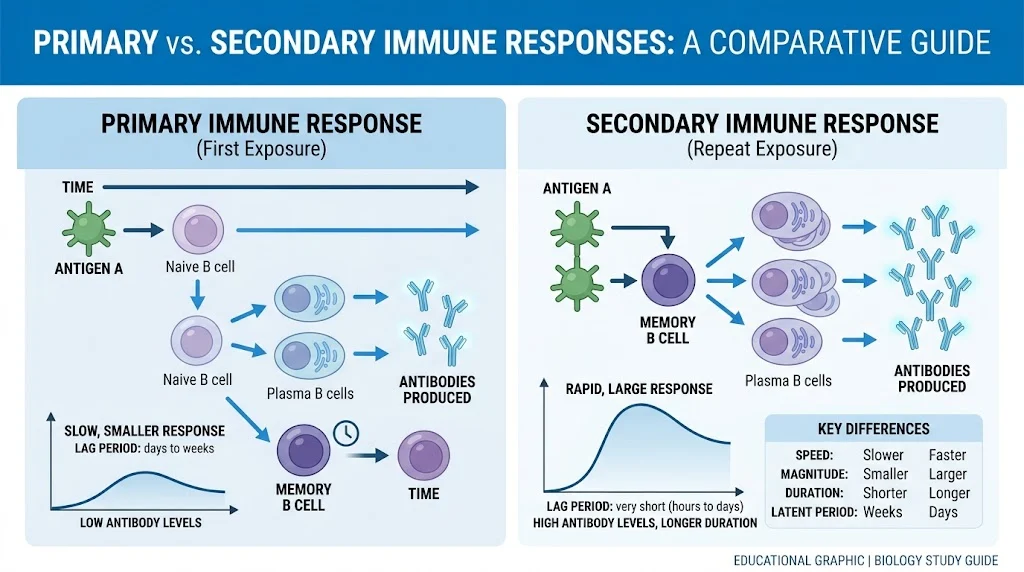
The primary immune response happens when the immune system encounters an antigen for the first time, while the secondary immune response happens after the immune system has already encountered that antigen and developed memory cells. The second response is generally faster and stronger.
Top alternatives: first immune response, second immune response, immune memory, first exposure response, repeat exposure response
Trying to explain the difference between the primary and secondary immune response can feel like your brain has suddenly opened 47 biology tabs at once. The topic comes up in school notes, biology exams, medical discussions, study groups, presentations, and those last-minute “please explain this before the test” messages from friends. The basic idea is actually easier than it sounds. The first encounter with an antigen requires the immune system to recognize it and build an appropriate response.
Later exposure benefits from immune memory, allowing the body to respond more quickly and efficiently. Understanding that difference also makes concepts such as antibodies, memory cells, vaccination, and immunity much easier to connect. Whether you need a simple explanation, a classroom-ready response, or a quick study line, the following sections break the topic into clear, natural, easy-to-remember explanations.
Simple Responses
- “The first response is the immune system learning, and the second is the immune system remembering.”
Example: Use this when explaining the concept to someone who is new to immunology.
Meaning: It summarizes the role of immune memory in simple language. - “First exposure takes more time, while later exposure is usually faster.”
Example: Use this as a quick biology-study explanation.
Meaning: It highlights the major difference in timing. - “The primary response happens first, and the secondary response happens after memory has formed.”
Example: Use this when answering a basic classroom question.
Meaning: It gives the core sequence clearly. - “Think of the first response as an introduction and the second as a reunion.”
Example: Use this when teaching the concept casually.
Meaning: It uses an everyday comparison to explain immune memory. - “The immune system has to recognize the antigen before it can respond efficiently.”
Example: Use this when explaining why the first response takes longer.
Meaning: It describes the initial recognition process. - “The secondary response benefits from immune memory.”
Example: Use this when giving a short exam answer.
Meaning: It identifies the main reason for the stronger later response. - “First exposure builds memory; later exposure uses that memory.”
Example: Use this as a quick revision line.
Meaning: It connects the two responses directly. - “The primary response is slower, while the secondary response is generally quicker.”
Example: Use this when comparing response speed.
Meaning: It gives a straightforward contrast. - “Memory cells are the key difference.”
Example: Use this when someone asks what makes the second response different.
Meaning: It identifies immune memory as the central concept. - “The immune system gets better prepared after the first encounter.”
Example: Use this when explaining the concept without technical vocabulary.
Meaning: It describes immune preparation in simple terms. - “The first encounter starts the process, and later encounters trigger a faster response.”
Example: Use this when explaining the sequence in class.
Meaning: It connects exposure history with response speed. - “Primary means first exposure, secondary means later exposure.”
Example: Use this for quick memorization.
Meaning: It gives the easiest terminology shortcut. - “The second response is powered by what the immune system learned earlier.”
Example: Use this when explaining immune memory to a beginner.
Meaning: It describes how previous exposure affects later immunity. - “The immune system remembers specific antigens.”
Example: Use this when discussing memory cells.
Meaning: It explains why later recognition can be faster. - “Same basic immune system, different level of preparation.”
Example: Use this when someone wants a quick conceptual comparison.
Meaning: It emphasizes the importance of prior exposure.
Exam-Friendly Responses
- “The primary response occurs after the first exposure to an antigen.”
Example: Use this as the opening sentence of a short-answer question.
Meaning: It defines the primary response accurately. - “The secondary response occurs after subsequent exposure to the same antigen.”
Example: Use this when writing a comparison answer.
Meaning: It explains when the later response occurs. - “The secondary response is generally faster and stronger because of immunological memory.”
Example: Use this for a biology exam response.
Meaning: It states the major functional difference. - “Memory B cells contribute to the rapid antibody response during subsequent exposure.”
Example: Use this when a question asks about B-cell memory.
Meaning: It connects memory cells with antibody production. - “The primary response includes an initial lag period before the response becomes detectable.”
Example: Use this when explaining response timing.
Meaning: It identifies the delay associated with first exposure. - “The secondary response usually has a shorter lag period.”
Example: Use this when comparing response curves.
Meaning: It explains why the second response appears sooner. - “Antibody levels generally rise more rapidly during a secondary response.”
Example: Use this when interpreting an antibody graph.
Meaning: It describes the typical difference in antibody kinetics. - “The secondary response reflects the formation of immunological memory.”
Example: Use this in a concise written answer.
Meaning: It identifies the biological explanation. - “The primary response establishes antigen-specific memory.”
Example: Use this when explaining why later exposure differs.
Meaning: It describes the lasting consequence of initial exposure. - “Secondary exposure can produce a more rapid and sustained antibody response.”
Example: Use this when discussing antibody concentration over time.
Meaning: It describes a common feature of secondary responses. - “The primary response begins with antigen recognition and activation of specific lymphocytes.”
Example: Use this in a more detailed exam answer.
Meaning: It describes the initial immune activation. - “The secondary response involves the activation of previously generated memory cells.”
Example: Use this when explaining immune memory.
Meaning: It shows why the later response can be more efficient. - “Both responses are antigen-specific.”
Example: Use this when asked about a shared feature.
Meaning: It explains that each response targets particular antigens. - “The secondary response is not simply a repeat of the first response.”
Example: Use this when correcting an oversimplified explanation.
Meaning: It emphasizes the importance of memory cells. - “The major distinction is previous exposure and the resulting immunological memory.”
Example: Use this as a concluding exam sentence.
Meaning: It summarizes the comparison.
Funny Responses
- “The immune system basically says, ‘Oh, you again?’”
Example: Use this when making a biology study group laugh.
Meaning: It humorously represents recognition during later exposure. - “First meeting: who are you? Second meeting: I remember you.”
Example: Use this when explaining immune memory casually.
Meaning: It compares immune recognition with meeting someone twice. - “Primary response is the introduction, secondary response is the ‘I know this person’ moment.”
Example: Use this in a fun classroom explanation.
Meaning: It makes immune memory easier to visualize. - “The immune system takes notes the first time.”
Example: Use this when explaining memory cells.
Meaning: It jokingly describes how the immune system prepares for future exposure. - “First exposure: loading. Second exposure: already installed.”
Example: Use this in a study meme.
Meaning: It compares immune memory with software preparation. - “The second time around, the immune system has receipts.”
Example: Use this in a casual biology discussion.
Meaning: It humorously represents stored immune memory. - “Primary response is the tutorial level.”
Example: Use this when making a gaming-style biology joke.
Meaning: It compares first exposure with learning the system. - “Secondary response said, ‘We have done this before.’”
Example: Use this as a memorable revision line.
Meaning: It emphasizes previous antigen exposure. - “First encounter: introductions. Second encounter: straight to business.”
Example: Use this when explaining why the later response can be faster.
Meaning: It humorously contrasts preparation with memory-based action. - “The immune system has entered its remembering era.”
Example: Use this in a social-media-style study post.
Meaning: It refers playfully to immune memory. - “Antigen shows up again and the immune system recognizes the username.”
Example: Use this when explaining antigen recognition humorously.
Meaning: It compares immune recognition with recognizing an online account. - “First exposure takes attendance; second exposure knows the whole class.”
Example: Use this when teaching the difference.
Meaning: It compares initial learning with established familiarity. - “Primary response is buffering; secondary response is already connected.”
Example: Use this as a tech-inspired biology joke.
Meaning: It compares the slower initial response with faster later action. - “The immune system really said, ‘Not this again.’”
Example: Use this when explaining repeat antigen exposure.
Meaning: It humorously represents immune recognition. - “Biology’s version of déjà vu.”
Example: Use this as a short study caption.
Meaning: It compares repeated antigen exposure with familiar recognition.
Clever Responses
- “The real advantage of the secondary response is memory, not magic.”
Example: Use this when someone thinks the immune system simply becomes stronger automatically.
Meaning: It points to immunological memory as the explanation. - “The first encounter creates preparation for the next one.”
Example: Use this when explaining the relationship between the two responses.
Meaning: It shows how the primary response sets up future immunity. - “Speed follows familiarity.”
Example: Use this as a memorable biology revision phrase.
Meaning: It summarizes why later responses can happen faster. - “The immune system responds differently because its history is different.”
Example: Use this when explaining previous exposure.
Meaning: It emphasizes the role of immune experience. - “Memory cells turn previous exposure into future readiness.”
Example: Use this when explaining immune memory.
Meaning: It describes the function of memory cells. - “The secondary response is a biological shortcut created by memory.”
Example: Use this in a study note.
Meaning: It describes how previous exposure improves response speed. - “First exposure builds the foundation; later exposure uses it.”
Example: Use this when teaching the concept.
Meaning: It gives a simple framework for understanding the sequence. - “A slower beginning can create a faster future response.”
Example: Use this when discussing why the primary response matters.
Meaning: It connects initial immune activation with later protection. - “Immune memory changes the starting point of the next response.”
Example: Use this when explaining response kinetics.
Meaning: It shows how previous exposure affects subsequent immunity. - “The secondary response is faster because the immune system is no longer starting from zero.”
Example: Use this as a conceptual explanation.
Meaning: It explains the practical impact of immune memory. - “Recognition is easier when the immune system has seen the antigen before.”
Example: Use this when explaining antigen-specific memory.
Meaning: It links prior exposure with faster recognition. - “The first response teaches; the second response recalls.”
Example: Use this as a concise study slogan.
Meaning: It summarizes learning and memory. - “Immune history matters.”
Example: Use this when explaining why two exposures can produce different responses.
Meaning: It emphasizes the importance of previous encounters. - “Memory cells are the biological bookmark.”
Example: Use this when making the concept easier to remember.
Meaning: It compares immune memory with saving useful information for later. - “The difference is preparation created by prior exposure.”
Example: Use this for a concise conceptual answer.
Meaning: It identifies the central reason for the different responses.
Short Responses
- “First exposure, then immune memory.”
Example: Use this as a quick revision note.
Meaning: It summarizes the basic sequence. - “Primary is first; secondary is later.”
Example: Use this when memorizing terminology.
Meaning: It gives the simplest distinction. - “Secondary means faster recall.”
Example: Use this as a quick study reminder.
Meaning: It links later exposure with immune memory. - “Memory cells make the difference.”
Example: Use this when answering a rapid-fire question.
Meaning: It identifies the key mechanism. - “First response builds memory.”
Example: Use this as a flashcard answer.
Meaning: It describes the main outcome of initial exposure. - “Later exposure gets a head start.”
Example: Use this when explaining the concept casually.
Meaning: It describes the advantage provided by memory. - “Primary is slower.”
Example: Use this when comparing response timing.
Meaning: It identifies a typical feature of the initial response. - “Secondary is usually quicker.”
Example: Use this as a quick comparison.
Meaning: It describes the faster later response. - “Same antigen, different immune history.”
Example: Use this when explaining why the responses differ.
Meaning: It emphasizes previous exposure. - “First encounter creates preparation.”
Example: Use this in a study note.
Meaning: It summarizes the role of initial exposure. - “Immune memory changes the response.”
Example: Use this when someone asks what causes the difference.
Meaning: It points to memory as the major factor. - “The second response has a biological advantage.”
Example: Use this when explaining response efficiency.
Meaning: It refers to the benefit of prior immune experience. - “First time takes setup.”
Example: Use this when explaining the slower response informally.
Meaning: It describes the preparation needed initially. - “Second time uses memory.”
Example: Use this as a simple revision phrase.
Meaning: It explains why subsequent exposure differs. - “Think first exposure versus remembered exposure.”
Example: Use this when helping someone memorize the distinction.
Meaning: It gives a simple conceptual framework.
Classroom Responses
- “The primary response follows the first encounter with an antigen.”
Example: Use this when answering a teacher’s basic question.
Meaning: It defines the initial response. - “The secondary response follows a later encounter with the same antigen.”
Example: Use this when comparing the two responses in class.
Meaning: It defines the later response. - “Memory lymphocytes help make subsequent responses more rapid.”
Example: Use this when discussing immune memory.
Meaning: It connects memory cells with response speed. - “The immune system does not forget every antigen it encounters.”
Example: Use this when introducing immune memory.
Meaning: It explains why previous exposure matters. - “The first response establishes antigen-specific memory.”
Example: Use this when explaining long-term immune preparation.
Meaning: It describes an important result of the initial response. - “A later response can begin more quickly because specific memory cells already exist.”
Example: Use this when explaining response graphs.
Meaning: It describes the mechanism behind faster recognition. - “Primary and secondary responses differ mainly because of prior exposure.”
Example: Use this when giving a concise comparison.
Meaning: It identifies the main factor. - “The secondary response can produce a greater antibody response.”
Example: Use this when discussing antibody levels.
Meaning: It describes a common characteristic of repeat exposure. - “The initial response requires activation of antigen-specific immune cells.”
Example: Use this when giving a slightly more detailed answer.
Meaning: It describes what happens during first exposure. - “Immune memory is an important feature of adaptive immunity.”
Example: Use this when connecting the topic to a broader lesson.
Meaning: It places the concept within adaptive immune function. - “The response becomes more efficient after prior antigen exposure.”
Example: Use this when discussing immune adaptation.
Meaning: It explains the functional benefit of memory. - “The first response prepares the immune system for future encounters.”
Example: Use this as a classroom summary.
Meaning: It connects initial and later responses. - “The secondary response generally has a shorter delay.”
Example: Use this when discussing timing.
Meaning: It explains the quicker appearance of the later response. - “Antigen-specific memory helps explain the difference.”
Example: Use this when answering a why question.
Meaning: It identifies the underlying biological reason. - “Previous exposure changes how quickly the immune system can respond.”
Example: Use this as a final classroom point.
Meaning: It summarizes the effect of immune memory.
Study Group Responses
- “Think of it as learn first, respond faster later.”
Example: Use this when helping a classmate revise.
Meaning: It makes the sequence easy to remember. - “Primary builds the memory; secondary uses it.”
Example: Use this as a group-study shortcut.
Meaning: It provides a memorable distinction. - “The second response has a head start.”
Example: Use this when explaining response speed.
Meaning: It describes the advantage of previous exposure. - “First exposure is the learning phase.”
Example: Use this when explaining the initial response.
Meaning: It presents first exposure as immune preparation. - “Later exposure is the memory phase.”
Example: Use this when explaining subsequent response.
Meaning: It highlights immune recall. - “Remember: primary equals first.”
Example: Use this as a terminology trick.
Meaning: It helps connect the word primary with initial exposure. - “Secondary means the immune system has history.”
Example: Use this when teaching the concept informally.
Meaning: It emphasizes previous exposure. - “Faster does not mean unrelated; it means prepared.”
Example: Use this when correcting a misunderstanding.
Meaning: It explains why the second response is quicker. - “Memory cells are your study keyword.”
Example: Use this when preparing for an exam.
Meaning: It points students toward a central concept. - “Think of the first response as training.”
Example: Use this when explaining immune preparation.
Meaning: It gives a familiar analogy. - “The second response benefits from the first.”
Example: Use this when summarizing the relationship.
Meaning: It shows how initial exposure affects later immunity. - “First exposure takes setup time.”
Example: Use this when discussing the lag period.
Meaning: It explains why the primary response is slower. - “The immune system remembers specific targets.”
Example: Use this when discussing antigen specificity.
Meaning: It explains the precision of immune memory. - “Repeat exposure can trigger a faster response.”
Example: Use this when reviewing response kinetics.
Meaning: It summarizes a key secondary-response feature. - “If you remember memory cells, you remember the main idea.”
Example: Use this as a final revision tip.
Meaning: It reinforces the central concept.
Comparison Responses
- “Primary means first exposure; secondary means subsequent exposure.”
Example: Use this when making a two-column comparison.
Meaning: It distinguishes the timing of each response. - “Primary is generally slower; secondary is generally faster.”
Example: Use this when comparing response speed.
Meaning: It identifies a major difference. - “Primary establishes memory; secondary benefits from memory.”
Example: Use this when comparing immune functions.
Meaning: It explains their relationship. - “Both responses are specific to antigens.”
Example: Use this when identifying a similarity.
Meaning: It shows that both involve antigen-specific immunity. - “Secondary responses usually reach higher antibody levels.”
Example: Use this when discussing antibody graphs.
Meaning: It describes a common difference in magnitude. - “Primary response has more initial preparation.”
Example: Use this when discussing the first encounter.
Meaning: It explains why the initial response takes longer. - “Secondary response starts with immune memory already available.”
Example: Use this when explaining the later response.
Meaning: It describes the advantage of previous exposure. - “The first response creates the conditions for a faster later response.”
Example: Use this when comparing both stages.
Meaning: It connects the two responses. - “Primary and secondary are connected, not separate immune systems.”
Example: Use this when correcting a common misunderstanding.
Meaning: It clarifies that they describe different responses of the same immune system. - “The main difference is previous antigen exposure.”
Example: Use this as a quick comparison answer.
Meaning: It identifies the key distinction. - “Memory cells help explain the stronger later response.”
Example: Use this when discussing immune memory.
Meaning: It links memory to response magnitude. - “The primary response takes longer to develop.”
Example: Use this when discussing timing.
Meaning: It describes the initial lag. - “The secondary response usually develops more rapidly.”
Example: Use this when discussing kinetics.
Meaning: It describes the later response. - “Both involve antigen-specific immune recognition.”
Example: Use this when discussing similarities.
Meaning: It identifies a shared feature. - “The secondary response reflects immune experience.”
Example: Use this when summarizing the comparison.
Meaning: It explains the effect of prior exposure.
Confident Responses
- “The key word here is memory.”
Example: Use this when answering a difficult biology question confidently.
Meaning: It directs attention to the central concept. - “Primary comes first, secondary benefits from preparation.”
Example: Use this when giving a concise explanation.
Meaning: It summarizes the relationship confidently. - “The difference is not random; it comes from prior exposure.”
Example: Use this when someone is confused about response differences.
Meaning: It explains the biological reason. - “A faster secondary response is a consequence of immune memory.”
Example: Use this in a study discussion.
Meaning: It connects speed with memory. - “The first exposure changes the next response.”
Example: Use this when explaining immune history.
Meaning: It summarizes the long-term effect of exposure. - “Previous exposure gives the immune system a head start.”
Example: Use this when teaching the concept.
Meaning: It describes the advantage created by memory. - “The primary response is where memory begins.”
Example: Use this when explaining the first encounter.
Meaning: It emphasizes the development of immune memory. - “The secondary response does not start from scratch.”
Example: Use this when comparing response timing.
Meaning: It explains why later responses can be faster. - “The immune system has already encountered the target.”
Example: Use this when explaining repeat exposure.
Meaning: It highlights the importance of immune history. - “Memory changes the response profile.”
Example: Use this when interpreting an antibody graph.
Meaning: It describes how prior exposure affects kinetics. - “The later response has an established memory advantage.”
Example: Use this when discussing immune preparedness.
Meaning: It emphasizes the benefit of memory cells. - “First exposure establishes the foundation.”
Example: Use this when explaining the initial immune response.
Meaning: It describes its role in preparing future responses. - “Repeat exposure activates an already prepared immune system.”
Example: Use this when discussing secondary responses.
Meaning: It explains why the later response can be more efficient. - “The terminology tells you the timeline.”
Example: Use this when helping someone remember the names.
Meaning: It links primary with first and secondary with later. - “Once you understand memory cells, the comparison becomes much easier.”
Example: Use this when helping someone study.
Meaning: It identifies the concept that connects the entire topic.
Friendly Responses
- “It sounds complicated, but the main idea is pretty simple.”
Example: Use this when helping a friend who feels confused.
Meaning: It makes the topic feel more approachable. - “Think first meeting versus second meeting.”
Example: Use this when explaining the concept casually.
Meaning: It creates an easy everyday analogy. - “The immune system remembers what it has seen.”
Example: Use this when giving a beginner-friendly explanation.
Meaning: It describes immune memory simply. - “First time takes longer because everything is new.”
Example: Use this when explaining the initial response.
Meaning: It describes the slower primary response. - “Later exposure is easier because memory is already there.”
Example: Use this when explaining the secondary response.
Meaning: It explains the benefit of prior exposure. - “Basically, the immune system learns from experience.”
Example: Use this when teaching the concept to a beginner.
Meaning: It summarizes adaptive immune memory. - “The second response gets a little head start.”
Example: Use this when discussing response speed.
Meaning: It describes the advantage of memory. - “Primary is the first encounter, secondary is the comeback.”
Example: Use this when making the distinction memorable.
Meaning: It uses casual language to describe repeat exposure. - “Memory cells are the reason the second response is different.”
Example: Use this when answering a friend’s question.
Meaning: It identifies the main mechanism. - “It is basically immune-system history.”
Example: Use this when explaining previous exposure.
Meaning: It gives a simple analogy for immune memory. - “The first response sets things up.”
Example: Use this when explaining the role of initial exposure.
Meaning: It describes preparation. - “The later response can react more quickly.”
Example: Use this when discussing repeat exposure.
Meaning: It explains the practical difference. - “You do not need to memorize a giant paragraph.”
Example: Use this when helping someone study.
Meaning: It reassures them that the concept can be simplified. - “Just remember first exposure versus remembered exposure.”
Example: Use this as a study shortcut.
Meaning: It gives a simple memory aid. - “Once the memory part clicks, the rest makes sense.”
Example: Use this when someone is struggling with the topic.
Meaning: It emphasizes the importance of understanding immune memory.
Supportive Responses
- “You’re closer to understanding it than you think.”
Example: Use this when a classmate feels stuck.
Meaning: It offers encouragement. - “Start with the timeline and everything gets easier.”
Example: Use this when helping someone organize the concept.
Meaning: It suggests beginning with first versus later exposure. - “Focus on memory cells first.”
Example: Use this when someone does not know where to start studying.
Meaning: It directs attention to a central concept. - “Do not worry about memorizing every detail at once.”
Example: Use this when someone feels overwhelmed.
Meaning: It encourages gradual learning. - “Get the basic difference down first.”
Example: Use this when helping with exam preparation.
Meaning: It prioritizes the fundamental distinction. - “First exposure, memory formation, later faster response.”
Example: Use this as a simple revision sequence.
Meaning: It gives a logical learning pathway. - “You can break the topic into three steps.”
Example: Use this when teaching the concept.
Meaning: It makes the material easier to organize. - “The timeline is your friend here.”
Example: Use this when explaining response progression.
Meaning: It encourages using sequence to understand the concept. - “Think about what changes after the first exposure.”
Example: Use this as a study question.
Meaning: It guides attention toward immune memory. - “If the graph looks confusing, compare the speed and magnitude.”
Example: Use this when reviewing immune-response curves.
Meaning: It identifies useful comparison points. - “You do not have to make it harder than it is.”
Example: Use this when someone is overcomplicating the topic.
Meaning: It encourages focusing on the core idea. - “Remember that prior exposure matters.”
Example: Use this as a quick revision reminder.
Meaning: It reinforces the central principle. - “Once you know why the second response is faster, the rest connects.”
Example: Use this when helping someone prepare for an exam.
Meaning: It encourages understanding rather than rote memorization. - “Keep the comparison simple first, then add details.”
Example: Use this when studying a complex chapter.
Meaning: It recommends building understanding progressively. - “You’ve got the concept once you can explain it in your own words.”
Example: Use this when checking whether someone understands the topic.
Meaning: It encourages active understanding.
FAQs
What Is The Primary Immune Response?
The primary immune response is the immune reaction that occurs after the first exposure to a specific antigen.
What Is The Secondary Immune Response?
The secondary immune response occurs after a later exposure to an antigen the immune system has encountered before. It is generally faster and stronger because of immunological memory.
Why Is The Secondary Response Faster?
The immune system has already generated antigen-specific memory cells after the initial exposure. These cells can contribute to a more rapid response when the same antigen is encountered again.
Which Response Produces More Antibodies?
In a typical adaptive immune response, the secondary response can produce a higher and more rapid antibody response than the primary response.
What Role Do Memory Cells Play?
Memory cells preserve antigen-specific immune information after an initial response. During subsequent exposure, they can respond more rapidly than cells encountering the antigen for the first time.
Conclusion
Understanding the difference between the primary and secondary immune response becomes much easier when you stop treating it like a giant vocabulary problem. The key idea is simple: the first exposure helps establish an antigen-specific immune response and memory, while later exposure can benefit from that memory.
That is why the secondary response is generally faster and stronger. Whether you are studying for an exam, explaining a graph, helping a classmate, or reviewing immunology notes, focus first on the timeline and then on memory cells. Once those two ideas click, the rest becomes much easier to organize. Save this guide for revision, share it with your study group, and use the simple explanations whenever biology starts feeling unnecessarily complicated
Discover More Related Articles:
- First Response Pregnancy Test Strips | Results, Timing & Accuracy In 2026
- Dose Response Relationship | How Scientists Measure Drug Effects In 2026

2 thoughts on “Primary vs Secondary Immune Response | Explanations & Comparisons In 2026”