Quick Answer
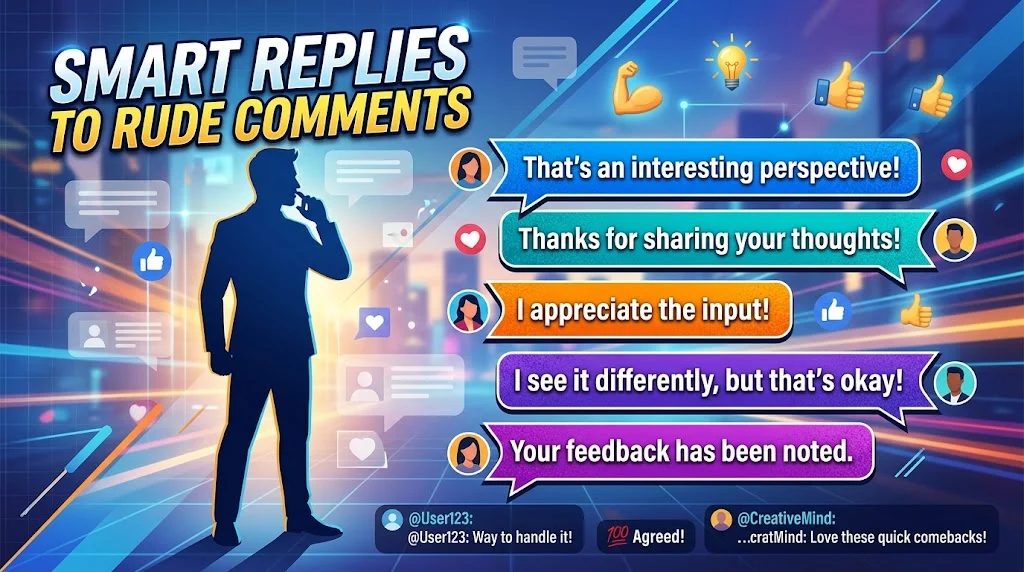
Smart replies to rude comments work best when they stay confident, clever, and controlled without making the situation worse. The right comeback can shut down unnecessary negativity while keeping you in control.
Top alternatives: clever comebacks, classy replies, witty responses, confident comebacks
We have all received that one comment that makes you stare at your screen and think, “Did they really just say that?” Rude comments can show up anywhere, from texts and DMs to Instagram posts, TikTok comments, group chats, school conversations, or everyday interactions. You do not always need a long argument to respond. Sometimes one calm, clever sentence says everything. Smart replies to rude comments are about more than winning an argument.
They can help you set boundaries, protect your peace, add humor, or simply show that someone’s negativity is not controlling your mood. Whether you want something funny, classy, sarcastic, confident, or completely unbothered, having a few ready-to-use responses makes those awkward moments much easier. The key is knowing when to clap back and when to simply move on.
Funny Responses
- “Wow, you really woke up and chose commentary today.”
Example: Use this when someone gives an unnecessary opinion about you.
Meaning: It humorously points out how eager they were to comment. - “Thanks for the surprise review.”
Example: Use this when someone critiques something you did without being asked.
Meaning: It turns their criticism into a joke. - “I’ll add that to the folder labeled ‘interesting opinions.’”
Example: Use this when someone shares an opinion you do not take seriously.
Meaning: It shows that their comment is not affecting you. - “That was certainly a sentence.”
Example: Use this after someone makes an unnecessarily rude statement.
Meaning: It humorously acknowledges the comment without validating it. - “Did you practice that one?”
Example: Use this when someone’s comeback sounds overly rehearsed.
Meaning: It lightly mocks the effort behind their comment. - “Bold of you to say that out loud.”
Example: Use this when someone makes an awkward or rude observation.
Meaning: It highlights how unnecessary their comment was. - “Well, that was a free opinion.”
Example: Use this when someone gives unsolicited criticism.
Meaning: It jokes that their opinion was unwanted. - “Interesting choice of words.”
Example: Use this when someone says something unnecessarily harsh.
Meaning: It calls attention to their tone without escalating. - “And somehow, the day continues.”
Example: Use this when you want to brush off an annoying comment.
Meaning: It shows that the remark is not important enough to ruin your day. - “I’ll alert the committee immediately.”
Example: Use this when someone acts as though their opinion is extremely important.
Meaning: It playfully exaggerates their importance. - “That sounded better in your head, didn’t it?”
Example: Use this when a rude comment falls flat.
Meaning: It humorously suggests their attempt was unsuccessful. - “Congratulations on sharing your thoughts.”
Example: Use this when someone gives unsolicited commentary.
Meaning: It sarcastically acknowledges their contribution. - “Okay, internet commentator of the year.”
Example: Use this when someone is overly critical online.
Meaning: It playfully calls out their excessive commentary. - “Noted, archived, and probably forgotten.”
Example: Use this when you want to show that you are not bothered.
Meaning: It communicates that their comment has little importance to you. - “That was almost impressive.”
Example: Use this when someone tries to provoke you.
Meaning: It lightly undermines their attempt without becoming aggressive.
Brutal Responses
- “Your opinion does not have automatic authority.”
Example: Use this when someone speaks as though their judgment is final.
Meaning: It reminds them that opinions are not facts. - “Being loud does not make you right.”
Example: Use this when someone is aggressively arguing their point.
Meaning: It separates confidence from correctness. - “You can dislike me without making it my problem.”
Example: Use this when someone openly expresses unnecessary negativity.
Meaning: It establishes emotional distance. - “I heard you. I just do not agree.”
Example: Use this when someone expects you to accept their criticism.
Meaning: It confidently rejects their opinion without arguing. - “That says more about you than it does about me.”
Example: Use this when someone makes a personal insult.
Meaning: It suggests their behavior reflects their own attitude. - “You are entitled to your opinion, not control over mine.”
Example: Use this when someone tries to dictate how you should think.
Meaning: It firmly protects your independence. - “Not every thought needs an audience.”
Example: Use this when someone makes an unnecessary public remark.
Meaning: It points out that their comment could have been kept private. - “I am not accepting applications for unsolicited criticism.”
Example: Use this when someone repeatedly critiques you.
Meaning: It humorously but firmly rejects their negativity. - “If that was meant to hurt me, it missed.”
Example: Use this when someone clearly tries to provoke you.
Meaning: It shows that their attempt had no effect. - “You made your point. It still does not matter to me.”
Example: Use this when someone keeps repeating their opinion.
Meaning: It ends the argument by refusing to engage further. - “Confidence does not require putting someone else down.”
Example: Use this when someone insults you to appear superior.
Meaning: It challenges the behavior rather than trading insults. - “I am comfortable disagreeing with you.”
Example: Use this when someone becomes upset because you disagree.
Meaning: It communicates calm self-assurance. - “You do not have to understand my choices.”
Example: Use this when someone criticizes a personal decision.
Meaning: It reinforces your right to make your own choices. - “That is your perspective, not the universal truth.”
Example: Use this when someone presents an opinion as fact.
Meaning: It distinguishes personal judgment from objective truth. - “I will survive your disapproval.”
Example: Use this when someone seems convinced you need their approval.
Meaning: It confidently shows independence.
Flirty Responses
- “That attitude is almost charming.”
Example: Use this when playful teasing already exists between you.
Meaning: It turns mild rudeness into light banter. - “You seem very interested in me today.”
Example: Use this when someone keeps commenting on what you are doing.
Meaning: It playfully suggests their attention is noticeable. - “You could have just said you wanted my attention.”
Example: Use this when someone keeps teasing you.
Meaning: It transforms the teasing into playful banter. - “That sounded suspiciously like flirting.”
Example: Use this when someone makes a teasing remark.
Meaning: It playfully reframes the comment. - “Careful, someone might think you like talking to me.”
Example: Use this when someone keeps finding reasons to comment.
Meaning: It jokingly suggests their attention is intentional. - “You are making it very hard to ignore you.”
Example: Use this when someone keeps teasing in a playful context.
Meaning: It responds with confident banter. - “Was that your best attempt at getting my attention?”
Example: Use this when someone playfully provokes you.
Meaning: It turns their teasing into a challenge. - “I see you brought your teasing game today.”
Example: Use this when someone is being playfully sarcastic.
Meaning: It acknowledges the banter without taking offense. - “You have quite the way with words.”
Example: Use this when someone delivers a clever but teasing remark.
Meaning: It gives their comment a playful spin. - “That was almost cute.”
Example: Use this when a teasing comment is harmless.
Meaning: It playfully downplays their attempt to provoke you. - “You really enjoy getting a reaction, huh?”
Example: Use this when someone repeatedly teases you.
Meaning: It points out their playful behavior. - “I might let that one slide.”
Example: Use this when someone makes a harmless teasing comment.
Meaning: It creates playful tension without hostility. - “You are lucky I have a sense of humor.”
Example: Use this when someone makes a mild joke at your expense.
Meaning: It playfully acknowledges the joke. - “Okay, that comeback was actually decent.”
Example: Use this when someone delivers a clever tease.
Meaning: It gives them playful credit. - “I will give you points for creativity.”
Example: Use this when someone makes an original teasing remark.
Meaning: It keeps the exchange light and playful.
Polite Responses
- “I understand that is how you feel.”
Example: Use this when someone expresses a negative opinion about you.
Meaning: It acknowledges their feeling without agreeing. - “I would appreciate a more respectful tone.”
Example: Use this when someone crosses a conversational boundary.
Meaning: It clearly asks for respectful communication. - “We can disagree without being rude.”
Example: Use this when a disagreement becomes personal.
Meaning: It sets a reasonable boundary. - “I am happy to discuss the issue respectfully.”
Example: Use this when someone wants to argue but you prefer a calm conversation.
Meaning: It keeps the door open to constructive discussion. - “I hear your concern.”
Example: Use this when criticism contains a legitimate point.
Meaning: It acknowledges the concern without automatically accepting the criticism. - “Let’s keep this conversation respectful.”
Example: Use this when someone becomes insulting.
Meaning: It directly establishes a boundary. - “I see things differently.”
Example: Use this when you disagree with someone’s judgment.
Meaning: It communicates disagreement calmly. - “Thank you for sharing your perspective.”
Example: Use this when someone gives an opinion you do not share.
Meaning: It acknowledges their viewpoint without endorsing it. - “I would rather keep this conversation constructive.”
Example: Use this when a discussion starts becoming hostile.
Meaning: It redirects the conversation toward something productive. - “There is no need for personal remarks.”
Example: Use this when someone attacks you instead of discussing the issue.
Meaning: It calls out the behavior clearly. - “I am not interested in arguing.”
Example: Use this when someone keeps trying to provoke you.
Meaning: It politely ends the conflict. - “We can leave it there.”
Example: Use this when a disagreement is going nowhere.
Meaning: It provides a calm exit. - “I respect your right to disagree.”
Example: Use this when someone has a different viewpoint.
Meaning: It recognizes disagreement without accepting disrespect. - “Let’s focus on the actual issue.”
Example: Use this when someone makes the conversation personal.
Meaning: It redirects attention toward the topic. - “I would prefer to have this conversation calmly.”
Example: Use this when someone is becoming heated.
Meaning: It encourages a more respectful exchange.
Professional Responses
- “I am happy to discuss the issue, but let’s keep the conversation professional.”
Example: Use this when a coworker or client becomes disrespectful.
Meaning: It sets a professional communication boundary. - “Please keep personal comments out of the discussion.”
Example: Use this when criticism becomes personal at work.
Meaning: It redirects the conversation toward professional matters. - “I would appreciate specific feedback rather than personal criticism.”
Example: Use this when someone criticizes your work vaguely.
Meaning: It asks for useful feedback. - “Let’s focus on the facts and the work involved.”
Example: Use this when an argument becomes emotional.
Meaning: It brings attention back to the relevant issue. - “I am open to constructive feedback.”
Example: Use this when someone has a legitimate concern.
Meaning: It shows professionalism while discouraging hostility. - “Please clarify the specific concern you are raising.”
Example: Use this when someone makes a vague negative remark.
Meaning: It asks them to explain their criticism. - “I would prefer to resolve this without personal remarks.”
Example: Use this when a professional conversation becomes tense.
Meaning: It requests respectful communication. - “Let’s keep our communication focused and respectful.”
Example: Use this when a discussion becomes unnecessarily hostile.
Meaning: It reinforces professional boundaries. - “I understand your concern, and I am happy to address it.”
Example: Use this when responding to legitimate criticism.
Meaning: It shows willingness to solve the issue. - “That comment does not help us resolve the issue.”
Example: Use this when someone makes an insulting remark during a discussion.
Meaning: It explains why the comment is unproductive. - “Could we return to the original topic?”
Example: Use this when someone takes a conversation off track.
Meaning: It redirects the discussion. - “I would rather discuss solutions than personal judgments.”
Example: Use this when someone focuses on blame.
Meaning: It shifts attention toward problem-solving. - “Let’s address the issue directly.”
Example: Use this when someone makes indirect personal remarks.
Meaning: It encourages clear communication. - “I am available to discuss this when the conversation is constructive.”
Example: Use this when the current discussion has become hostile.
Meaning: It establishes a condition for continuing. - “Thank you for raising the concern. Let’s look at the details.”
Example: Use this when criticism may contain useful information.
Meaning: It responds professionally while moving toward facts.
Creative Responses
- “That comment just took an unexpected detour.”
Example: Use this when someone suddenly becomes rude.
Meaning: It humorously points out the shift in tone. - “Interesting plot twist from the comment section.”
Example: Use this when an online comment becomes unexpectedly negative.
Meaning: It treats the rudeness as an amusing surprise. - “Your comment has entered the unnecessary section.”
Example: Use this when someone adds an unhelpful opinion.
Meaning: It creatively labels the remark as irrelevant. - “That was a bold paragraph for such little information.”
Example: Use this when someone writes a long but unhelpful criticism.
Meaning: It humorously questions the value of their comment. - “Adding that to today’s collection of random opinions.”
Example: Use this when someone offers unsolicited commentary.
Meaning: It shows that you are not taking the comment seriously. - “That comment definitely had main-character energy.”
Example: Use this when someone makes the conversation about themselves.
Meaning: It humorously calls out their dramatic behavior. - “Well, that arrived with unnecessary confidence.”
Example: Use this when someone makes a rude statement very confidently.
Meaning: It lightly mocks their certainty. - “The comment section has officially chosen chaos.”
Example: Use this when several people are being negative.
Meaning: It humorously describes the growing drama. - “A fascinating contribution to absolutely nothing.”
Example: Use this when someone adds an irrelevant rude comment.
Meaning: It cleverly dismisses their contribution. - “That was quite the creative interpretation.”
Example: Use this when someone makes an exaggerated assumption about you.
Meaning: It points out that their conclusion is imaginative rather than accurate. - “I admire the confidence, if not the conclusion.”
Example: Use this when someone is confidently wrong or unfair.
Meaning: It separates their confidence from the quality of their point. - “That comment deserves its own tiny documentary.”
Example: Use this when someone writes an overly dramatic remark.
Meaning: It humorously exaggerates their comment. - “And here comes the unsolicited director’s commentary.”
Example: Use this when someone narrates or judges your choices.
Meaning: It playfully calls out their unnecessary commentary. - “Your opinion has certainly made an entrance.”
Example: Use this when someone arrives with a strong negative opinion.
Meaning: It acknowledges their comment without taking it seriously. - “That was a whole journey for one sentence.”
Example: Use this when someone overexplains a rude remark.
Meaning: It humorously points out the unnecessary effort.
Sarcastic Responses
- “Thank you for your extremely important announcement.”
Example: Use this when someone acts as though their opinion is official news.
Meaning: It sarcastically exaggerates their importance. - “I was worried nobody would give me an opinion today.”
Example: Use this when someone offers unsolicited criticism.
Meaning: It sarcastically suggests their opinion was unnecessary. - “What would I ever do without that feedback?”
Example: Use this when someone gives criticism you did not request.
Meaning: It humorously pretends their comment was essential. - “Amazing. I definitely needed to hear that.”
Example: Use this when someone says something unnecessarily rude.
Meaning: It sarcastically communicates the opposite. - “You have truly changed the course of my day.”
Example: Use this when someone thinks their insult matters deeply.
Meaning: It mocks the supposed importance of their remark. - “I will treasure that opinion forever.”
Example: Use this when someone gives an opinion you intend to ignore.
Meaning: It sarcastically shows how little weight you give it. - “Thank you for solving a problem I never had.”
Example: Use this when someone criticizes something that was not an issue.
Meaning: It highlights the unnecessary nature of their comment. - “I shall alert the entire internet.”
Example: Use this when someone makes a dramatic statement online.
Meaning: It humorously exaggerates the significance of their comment. - “Your concern has been filed under ‘noted.’”
Example: Use this when you want to dismiss criticism calmly.
Meaning: It signals that you heard them without being persuaded. - “How generous of you to share.”
Example: Use this when someone offers unsolicited advice.
Meaning: It sarcastically acknowledges their contribution. - “I will try to recover from this devastating review.”
Example: Use this when someone gives a minor insult.
Meaning: It humorously exaggerates how little the remark affects you. - “Thank goodness you arrived with your expert opinion.”
Example: Use this when someone acts overly authoritative.
Meaning: It sarcastically challenges their self-importance. - “Oh no, my imaginary approval rating.”
Example: Use this when someone says you should care about their approval.
Meaning: It shows that their judgment does not control you. - “What a groundbreaking observation.”
Example: Use this when someone states something obvious in a rude way.
Meaning: It sarcastically mocks the supposed brilliance of the remark. - “I am sure the world was waiting for that comment.”
Example: Use this when someone makes an unnecessary public remark.
Meaning: It humorously dismisses the comment’s importance.
Cute Responses
- “Aww, someone has strong feelings today.”
Example: Use this when a friend’s teasing becomes mildly rude.
Meaning: It softens the moment with playful humor. - “That was a little spicy.”
Example: Use this when someone makes a mildly sharp comment.
Meaning: It acknowledges the attitude without escalating. - “Okay, tiny bit rude, but we’re still good.”
Example: Use this when you want to call out a friend’s comment gently.
Meaning: It sets a small boundary while keeping the mood friendly. - “Let’s use our nice words.”
Example: Use this when someone becomes unnecessarily harsh.
Meaning: It playfully encourages better behavior. - “No need for the extra sass.”
Example: Use this when someone adds unnecessary attitude.
Meaning: It gently asks them to tone it down. - “You can say that without being mean.”
Example: Use this when criticism could have been expressed better.
Meaning: It teaches a kinder communication style. - “Okay, I hear you, little grump.”
Example: Use this with someone you know well.
Meaning: It playfully acknowledges their bad mood. - “Let’s keep the claws tucked away.”
Example: Use this when someone is being unnecessarily sharp.
Meaning: It humorously asks them to relax. - “I think you need a snack and a reset.”
Example: Use this when a friend seems unusually irritable.
Meaning: It gently suggests their mood may be affecting their behavior. - “That sounded grumpy.”
Example: Use this when someone makes a short, rude comment.
Meaning: It points out the tone without attacking them. - “Okay, we are choosing kindness today.”
Example: Use this when someone starts becoming disrespectful.
Meaning: It encourages a more positive tone. - “You can do better than that.”
Example: Use this when someone makes an unnecessarily hurtful remark.
Meaning: It challenges the behavior without insulting them. - “Let’s try that sentence again.”
Example: Use this when someone phrases something rudely.
Meaning: It gives them a chance to communicate respectfully. - “I know you have a nicer version of that thought.”
Example: Use this when a friend says something harsher than necessary.
Meaning: It encourages them to soften their wording. - “Okay, peace treaty?”
Example: Use this when you want to end a minor disagreement.
Meaning: It offers a cute and friendly way to move on.
Confident Responses
- “I know who I am, so that comment does not define me.”
Example: Use this when someone makes a personal criticism.
Meaning: It shows strong self-confidence. - “I do not need everyone to agree with me.”
Example: Use this when someone expects you to seek approval.
Meaning: It communicates independence. - “I am comfortable with my decision.”
Example: Use this when someone criticizes a choice you made.
Meaning: It shows that you trust your judgment. - “You are free to think that.”
Example: Use this when someone gives an opinion you disagree with.
Meaning: It acknowledges their freedom without accepting their view. - “I am not changing myself to satisfy a comment.”
Example: Use this when someone tries to pressure you.
Meaning: It establishes personal confidence. - “Your approval is not required.”
Example: Use this when someone acts as though you need their permission.
Meaning: It reinforces independence. - “I can handle disagreement without taking it personally.”
Example: Use this when someone expects an emotional reaction.
Meaning: It demonstrates emotional control. - “I am good with where I stand.”
Example: Use this when someone challenges your position.
Meaning: It communicates confidence without aggression. - “I know what works for me.”
Example: Use this when someone criticizes a personal choice.
Meaning: It reinforces your right to make your own decisions. - “I am not here to impress everyone.”
Example: Use this when someone judges you unfairly.
Meaning: It shows that universal approval is not your goal. - “You can disagree without changing my mind.”
Example: Use this when someone keeps pressuring you.
Meaning: It maintains your position calmly. - “I do not owe you an explanation for everything.”
Example: Use this when someone demands justification for a personal decision.
Meaning: It establishes a healthy boundary. - “I am choosing not to take that personally.”
Example: Use this when someone makes a provocative comment.
Meaning: It shows emotional maturity. - “I respect myself enough to walk away from disrespect.”
Example: Use this when someone refuses to communicate respectfully.
Meaning: It establishes a firm boundary. - “I am not arguing for permission to be myself.”
Example: Use this when someone criticizes your personality or choices.
Meaning: It confidently reinforces individuality.
Emotional Responses
- “That comment actually hurt, and I would appreciate more care.”
Example: Use this when someone’s words genuinely affect you.
Meaning: It honestly communicates your feelings. - “I understand you are upset, but please do not take it out on me.”
Example: Use this when someone directs their frustration toward you.
Meaning: It separates their emotions from your responsibility. - “I am willing to listen if we can speak respectfully.”
Example: Use this when someone wants to discuss a problem angrily.
Meaning: It keeps communication open while setting a boundary. - “I do not think being rude will solve this.”
Example: Use this when someone becomes hostile during a disagreement.
Meaning: It redirects attention toward resolution. - “You can tell me what bothers you without insulting me.”
Example: Use this when criticism becomes personal.
Meaning: It encourages honest but respectful communication. - “I would rather understand the problem than fight about it.”
Example: Use this when an argument starts escalating.
Meaning: It prioritizes understanding over conflict. - “That felt unnecessarily harsh.”
Example: Use this when someone crosses a line.
Meaning: It directly identifies the hurtful tone. - “I need this conversation to stay respectful.”
Example: Use this when you want to continue talking safely and calmly.
Meaning: It clearly states a boundary. - “I am not going to respond with the same energy.”
Example: Use this when someone is deliberately provoking you.
Meaning: It shows that you will not mirror their negativity. - “I hear your frustration, but I still deserve respect.”
Example: Use this when someone is angry with you.
Meaning: It validates emotion while maintaining a boundary. - “Let’s take a moment before this gets worse.”
Example: Use this when a conversation is becoming heated.
Meaning: It encourages both sides to pause. - “I want to solve this, not hurt each other.”
Example: Use this during a serious disagreement.
Meaning: It shifts attention from conflict toward resolution. - “I am willing to talk when we are both calmer.”
Example: Use this when the current conversation is too heated.
Meaning: It creates space for a healthier discussion. - “I care about the issue, but I will not accept disrespect.”
Example: Use this when a disagreement matters but the tone has become harmful.
Meaning: It balances commitment with a clear boundary. - “I would rather leave this conversation than make it worse.”
Example: Use this when continuing the argument would be unproductive.
Meaning: It chooses peace over unnecessary conflict.
Clever Responses
- “A reaction is not an obligation.”
Example: Use this when someone clearly wants to provoke you.
Meaning: It reminds them that you choose how to respond. - “Not every opinion deserves a debate.”
Example: Use this when someone keeps trying to argue.
Meaning: It emphasizes that you do not need to engage with everything. - “Disagreement is not disrespect, but insults are.”
Example: Use this when someone confuses criticism with personal attacks.
Meaning: It clearly separates disagreement from rude behavior. - “The strongest response is sometimes no response.”
Example: Use this when a comment is designed only to provoke you.
Meaning: It recognizes silence as a valid choice. - “You gave an opinion; I gave it the appropriate amount of attention.”
Example: Use this when someone expects you to be bothered.
Meaning: It shows that you heard them without giving their words power. - “A personal attack usually means the argument ran out of substance.”
Example: Use this when someone stops discussing the actual issue.
Meaning: It points out the shift from ideas to insults. - “Being offended by my boundary does not make the boundary unreasonable.”
Example: Use this when someone reacts badly to a limit you set.
Meaning: It reinforces that boundaries can remain valid despite disagreement. - “You can challenge my idea without attacking my character.”
Example: Use this when someone makes a personal remark during a debate.
Meaning: It encourages healthier disagreement. - “I prefer conversations that leave everyone smarter, not angrier.”
Example: Use this when a discussion becomes unnecessarily hostile.
Meaning: It promotes constructive communication. - “Your tone is making your point harder to hear.”
Example: Use this when someone has a legitimate point but communicates it rudely.
Meaning: It explains how their behavior affects the conversation. - “If the goal is communication, insults are not helping.”
Example: Use this when someone becomes insulting.
Meaning: It brings the focus back to effective communication. - “You can be honest without being cruel.”
Example: Use this when someone claims their rudeness is simply honesty.
Meaning: It distinguishes honesty from unnecessary harshness. - “I will consider useful feedback and leave the rest behind.”
Example: Use this when receiving mixed criticism.
Meaning: It shows that you can accept useful information without absorbing negativity. - “A calm answer can say more than an angry paragraph.”
Example: Use this when someone sends a long hostile message.
Meaning: It values composure over escalation. - “I choose the response that matches my values, not your attitude.”
Example: Use this when someone is trying to pull you into an argument.
Meaning: It emphasizes personal control over reactions.
FAQs
What Is A Smart Reply To A Rude Comment?
A smart reply is usually short, confident, and controlled. It can be funny, polite, sarcastic, or direct depending on the situation.
Should I Reply To Every Rude Comment?
No. Sometimes ignoring, muting, blocking, or simply moving on is more effective than continuing the exchange.
What Is A Good Response To A Rude Person?
Try “We can disagree without being disrespectful” if you want to set a calm boundary without escalating the situation.
What Is A Funny Reply To A Rude Comment?
You can use “Thanks for the surprise review” when the situation is light enough for humor. Make sure the person and context can handle the joke.
What If The Rude Comment Actually Hurts Me?
You do not have to pretend it did not. A direct response such as “That was unnecessarily harsh” can communicate how the comment affected you.
Conclusion
Rude comments do not always deserve a dramatic comeback. Sometimes the smartest response is funny, sometimes it is direct, and sometimes it is simply walking away from the conversation. The goal is to respond in a way that keeps you in control rather than letting someone else’s attitude decide your mood.
Use humor when the moment is light, choose a professional response when the setting requires it, and set a clear boundary when someone crosses the line. A great comeback is not about being the loudest person in the room. It is about knowing what deserves your energy. Save this list for your next awkward comment, share it with a friend, and keep your best comebacks ready.
Discover More Related Articles:
- First Response Pregnancy Test Strips | Results, Timing & Accuracy In 2026
- Dose Response Relationship | How Scientists Measure Drug Effects In 2026
